Getting Started
Embarking on a journey into the amazing world of art can be as daunting as it is exciting.
So, if you’re wondering where to start and would love to turn your vision into reality, we’ve compiled our essential art tips tailored for beginners to help guide your first strokes and infuse confidence into your creative process.
1. Supplies
Before you dive into the vast sea of creativity, ensure you have the necessary tools. Try not to be overwhelmed by the multitude of supplies available. Start simple: a basic set of pencils, erasers, paper, and perhaps some paints and brushes if you’re inclined to try color.
Remember, the quality of your tools can affect your work, so opt for artist-grade materials within your budget.

2. Understand the Basics
Art is not just about instinct; it’s also a discipline. Familiarize yourself with the fundamental principles such as line, composition, perspective, tone, light and shadow, and color theory.
Our Free Urban Sketching Course goes into detail about all of the basics to help you get started and is a great place to begin.
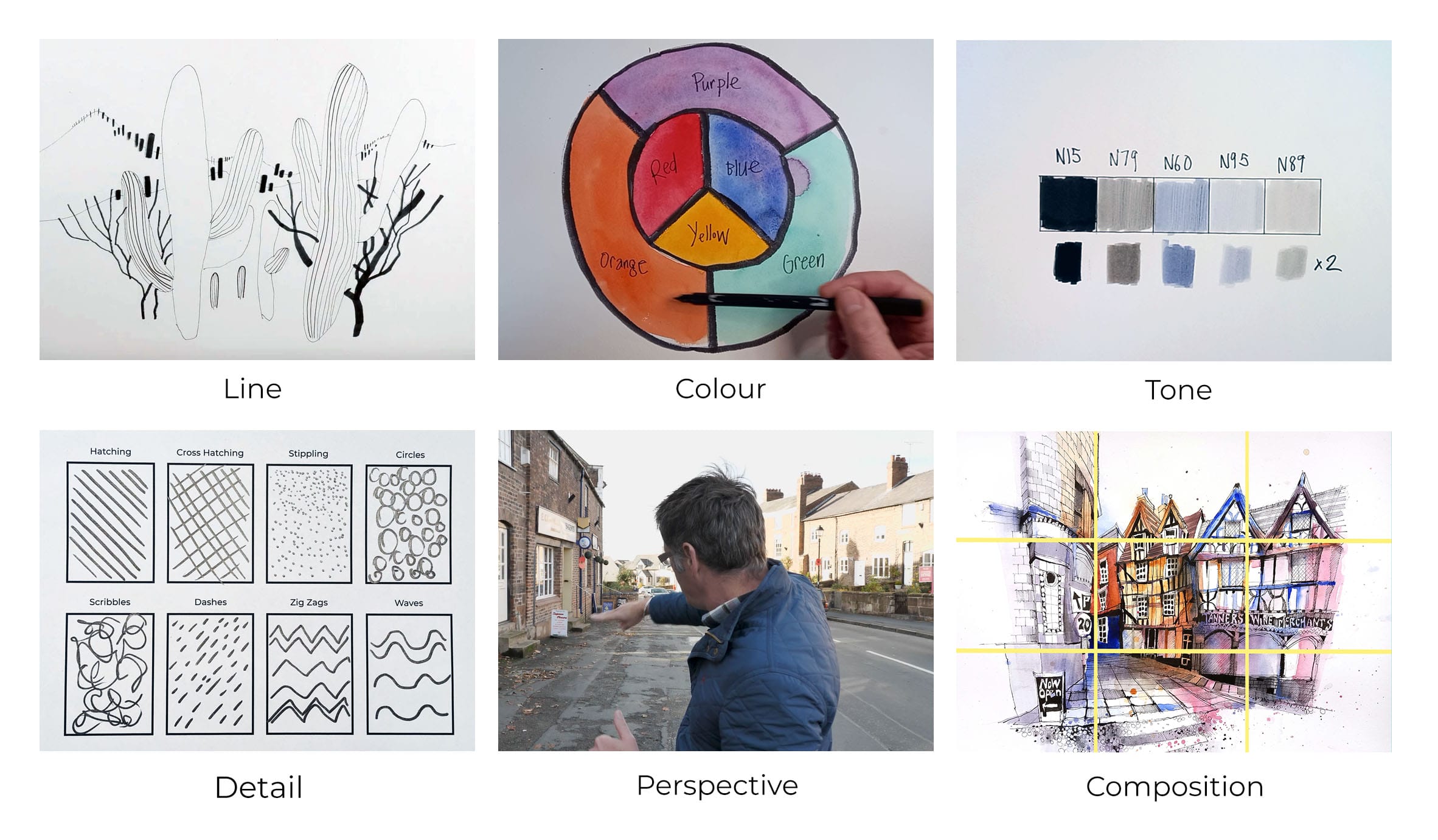
3. Observation
Artistry comes from seeing — truly seeing — and then translating those observations onto your canvas or paper.
Pay attention to the details in the world around you, notice how light plays on surfaces, how colors change under different conditions, and how perspectives shift with your viewpoint.

4. Drawing from Life
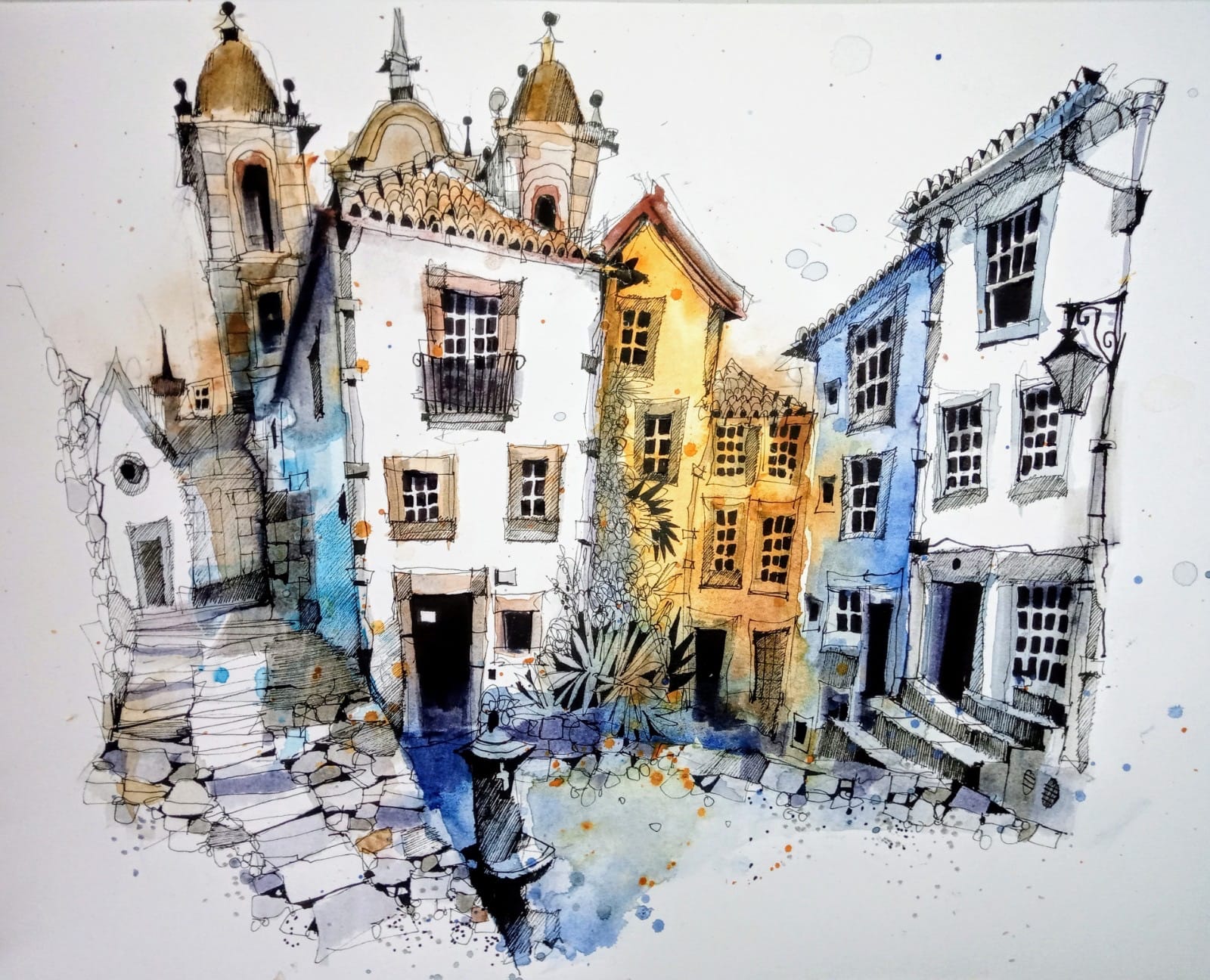
One of the best ways to improve your art is to practice drawing from life. Urban Sketching is a great way to start capturing the world around you and helps you to develop observational skills and an understanding of dimensional forms.
You can also try drawing objects in your house to practice noticing colour, light, shadow, and dimension.
5. Embrace the Sketchbook

6. Take Your Time
Art takes time. Your first attempts may not be masterpieces, and that’s okay. Each piece you create is a step on your artistic journey.
Learn to enjoy the process rather than just striving for the final product. Mistakes help us to grow and to find new ways of working.
7. Grow Through Feedback
Share your work with others and be open to hearing feedback and opinions. It’s not always easy, but constructive feedback is a powerful tool for growth.
Join online forums, and local art communities, or take courses where you can engage with peers and mentors.

8. Experiment
9. Find Inspiration

10. Set Realistic Goals
Set achievable goals for your art. It could be as simple as drawing every day for a month, taking a new course for beginners, learning a new technique, or completing a piece you’ve been working on. Celebrate when you achieve these goals to maintain momentum.
Enjoy the process!
Remember, there is no ‘right’ way to create art. These tips are just suggested ways to help you in your creative journey. Hold your brush with confidence, let your imagination run free, and most importantly, enjoy every moment of your creative adventure.