GREATEST HITS OF LONDON
WITH IAN FENNELLY
Join Ian Fennelly in Drawing and Painting Some of London’s Most Iconic Places While Learning His 3-Step Quick Sketching Methodology That You Can Apply Anywhere!
E 50 Lessons 6 Workshops j Bonus 20 minute sketch
COURSE DETAILS
Pulling up a chair and whipping out your sketchbook and paints to draw iconic buildings in one of the world's busiest cities, is no mean feat!
But, there was a method to our madness.
Working in a city as frenetic as London gave Ian the perfect opportunity to teach you his 3-Step Quick Sketching Methodology that enables you to draw even the most seemingly complex scenes, in much less time.
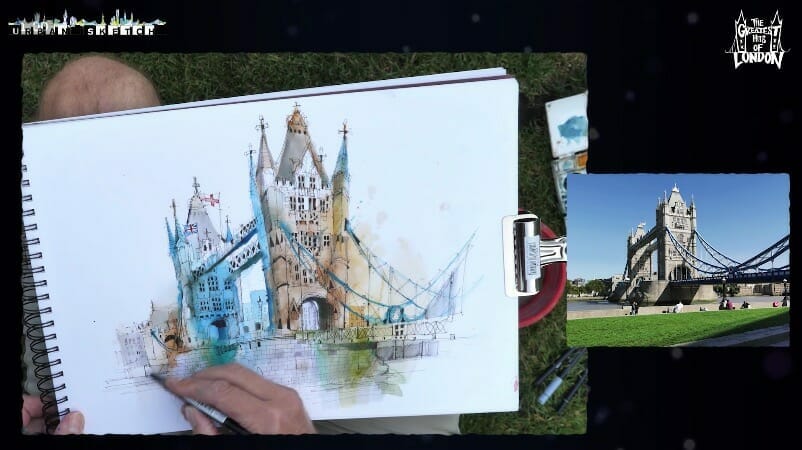
The Greatest Hits of London course is urban sketching in its rawest form, taught by a bona fide expert. It's fast. It's fun. And we think you'll agree, it produces outstanding results too!

YOUR INSTRUCTOR
Ian Fennelly has built an extraordinary reputation as one of the world’s finest urban sketchers and most sought-after teachers. His distinct style of on-location art, engaging teaching methods and all-round creativity has earned him a passionate global following. And now, for the first time, he’s peeling back the curtain and teaching you his line-by-line methodology for sketching your own phenomenal urban art.
Join Us and Discover The Simple 3-Step Quick Sketching METHODOLOGY That Produces Incredible Artwork, Like This:
Tower Bridge
Trafalgar Square

St Paul's Cathedral
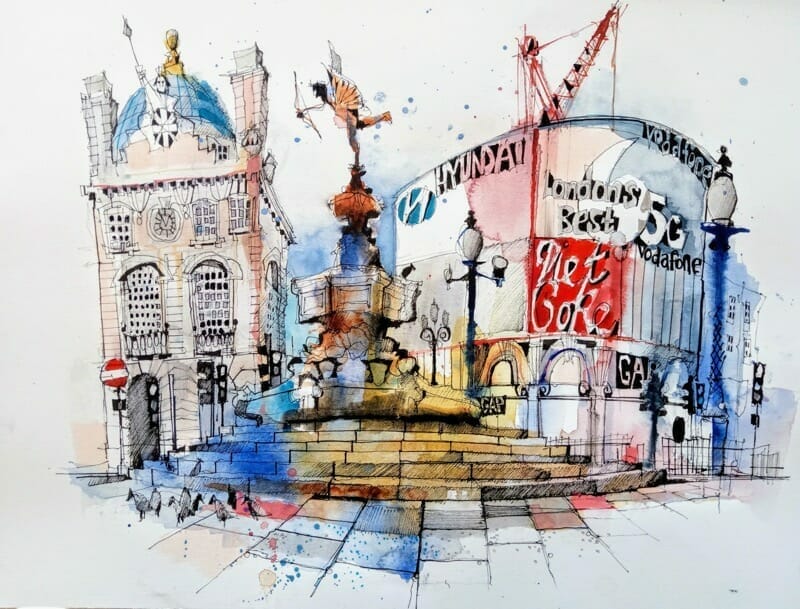
Piccadilly Circus
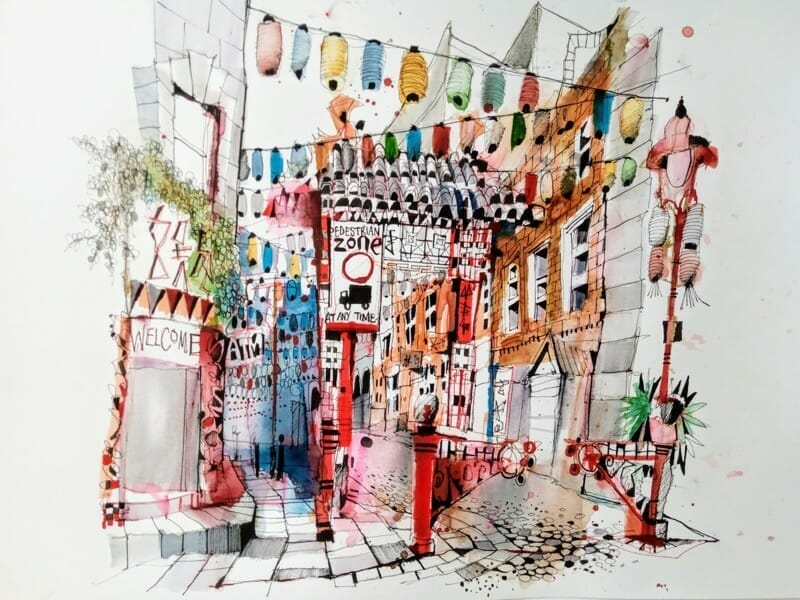
China Town
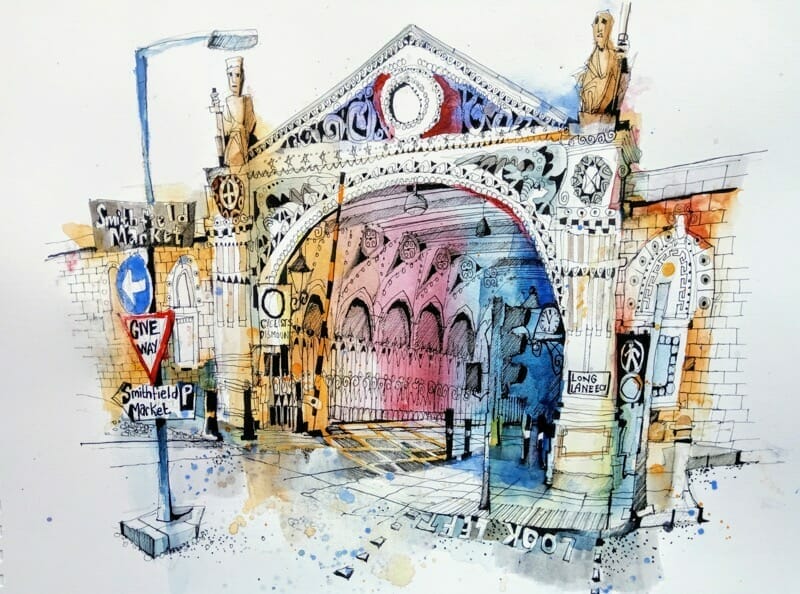
Smithfield Market
YOUR LESSONS
Watch, learn and follow-along as Ian breaks each of these 6 iconic scenes down into just 3 simplified steps. By the end of this course, you'll have enough knowledge and skills to do your own quick sketches, on-the-go, in any city in the world!
TRAFALGAR SQUARE
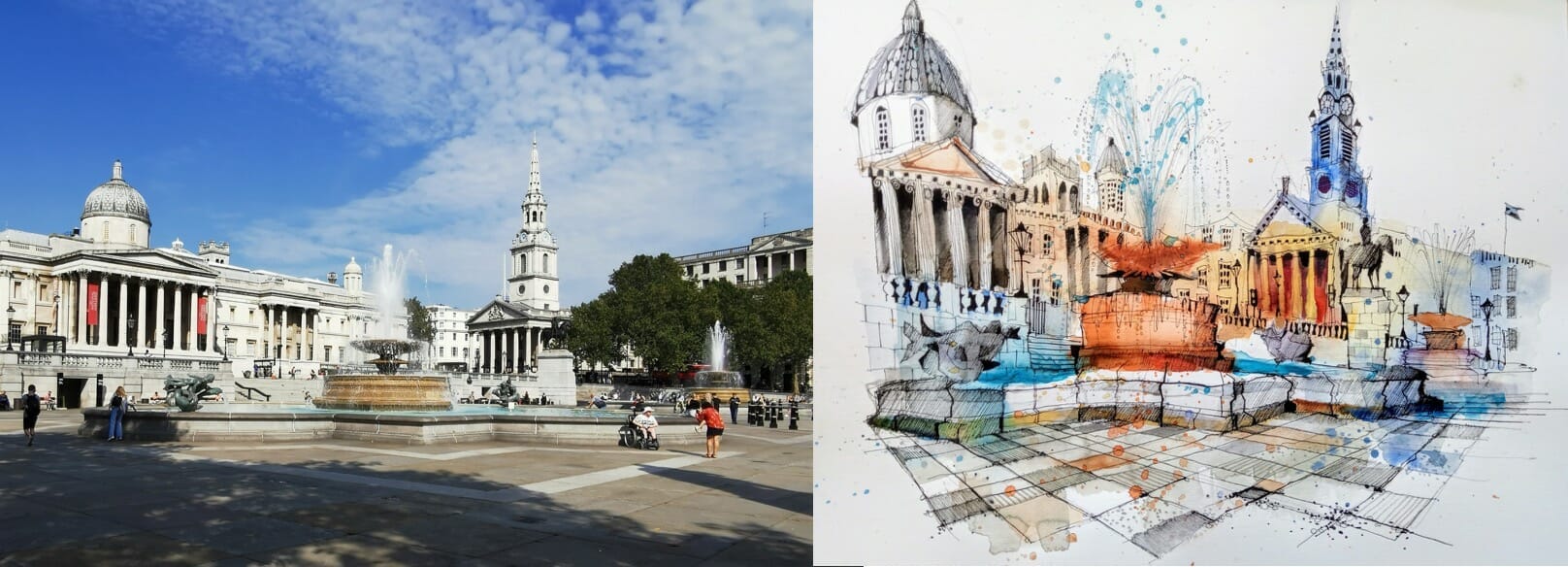
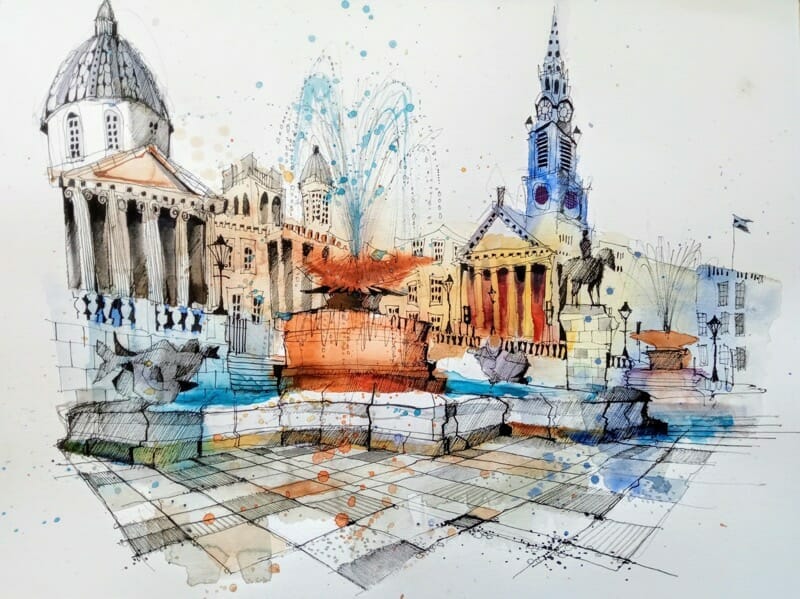
Trafalgar Square is the epicentre of London. An incredibly busy place with lots of people, lots of pigeons and lots of noise. In other words, the perfect starting point for your urban quick sketching journey!
In this first workshop, you're going to learn how Ian approaches and makes sense of a complex scene like this.
Then, starting at the water fountain you'll work your way out, sketching the National Gallery, Nelson's Column, the lions and the Church. By the end of this workshop, you'll understand how Ian draws and integrates many seemingly unrelated structures into one visually striking scene that just flows.
PICCADILY CIRCUS
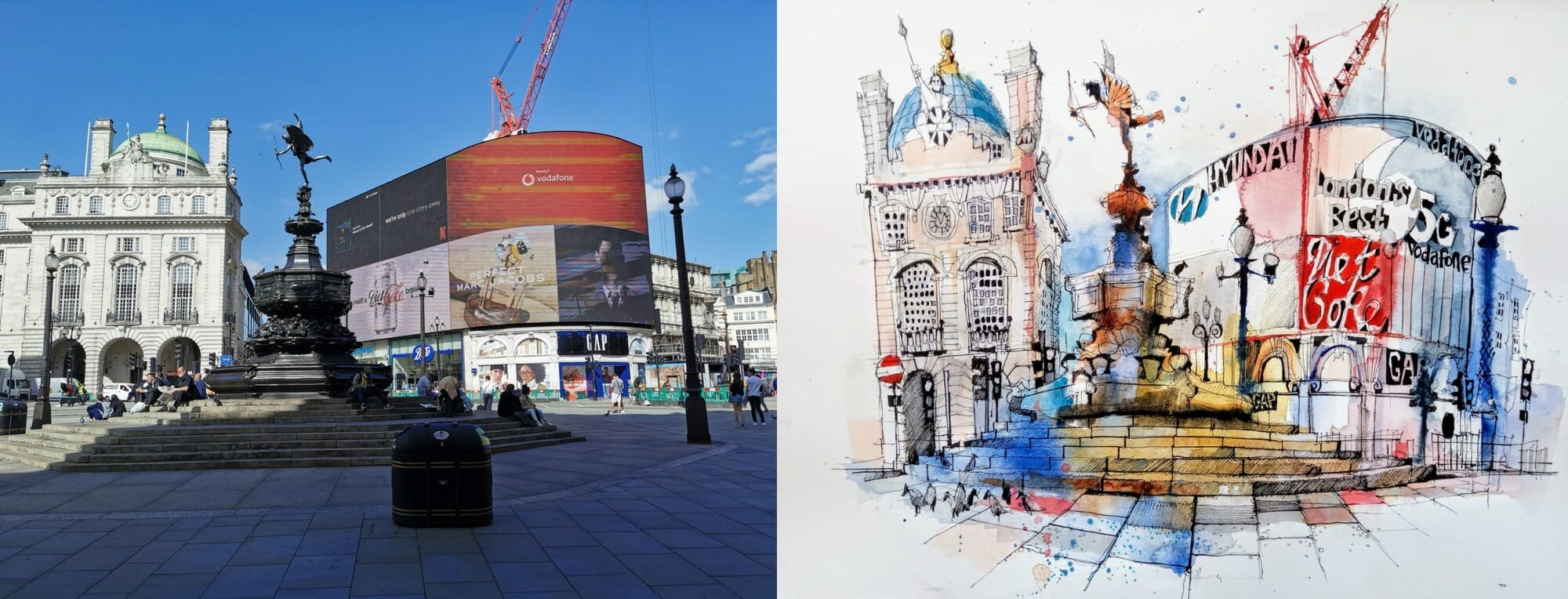
Starting with the statue of Eros, which is the focal point of this scene, we'll work our way down the steps and build out the structure to the scene with our pens.
Then, we'll work our way out and draw the two contrasting buildings behind; a very old building and a very new building with neon signs. And this is where you'll really start to have fun, as you discover how to start playing with a scene like this!
Following Ian's 3-Step Process, you will be surprised at what you accomplish from this thoroughly enjoyable and entertaining workshop.
CHINA TOWN
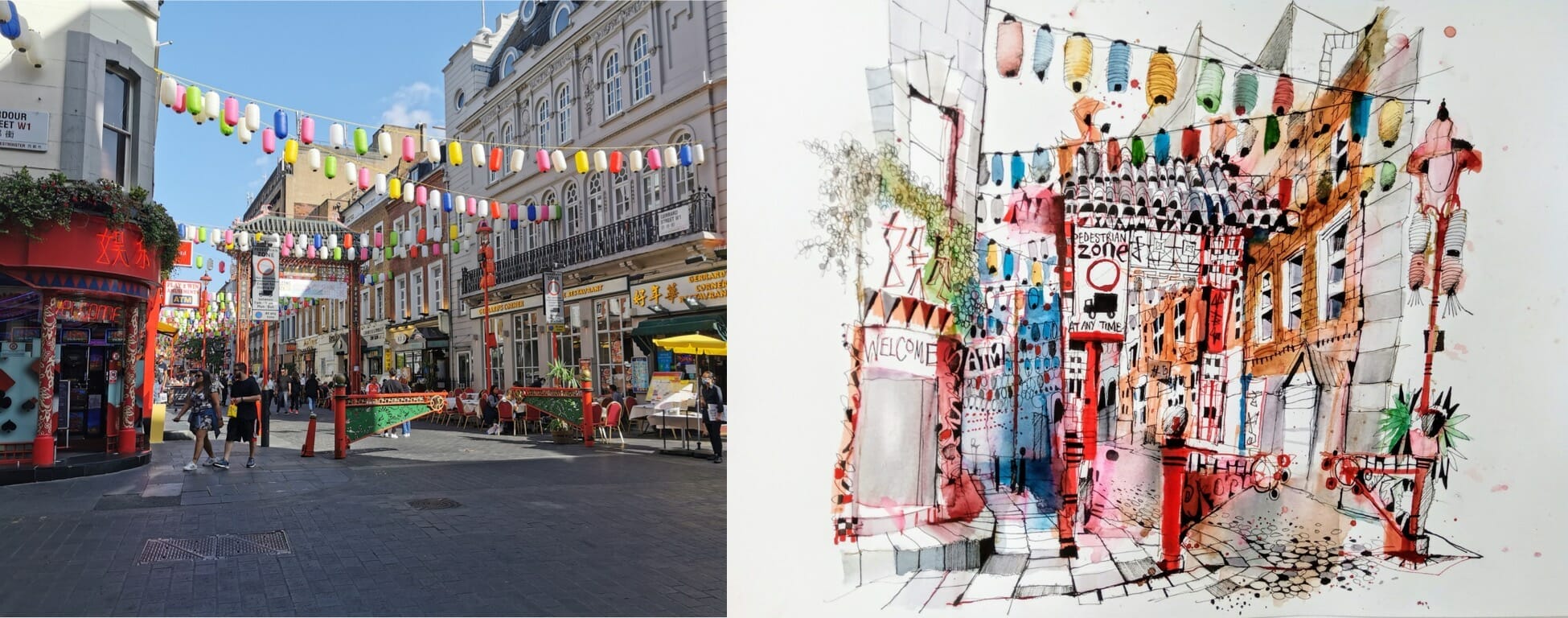
In workshop 3, Ian takes you on a wonderful journey through a surprisingly complex scene that's layered deeply with ful lanterns, lots of signage, beautiful Chinese writing and plenty of interesting things happening within the scene.
Watch, learn and allow yourself to be swept away with Ian in all of the intricate detail that Chinatown offers, until you end up with an abstract piece of urban art that expresses the energy, the buzz, and the vibrancy of a place like this.
This is workshop you won't want to miss because it's an opportunity to see first-hand how experts like Ian tackle challenging projects, especially when the clock is ticking.
Workshop #4:
TOWER BRIDGE
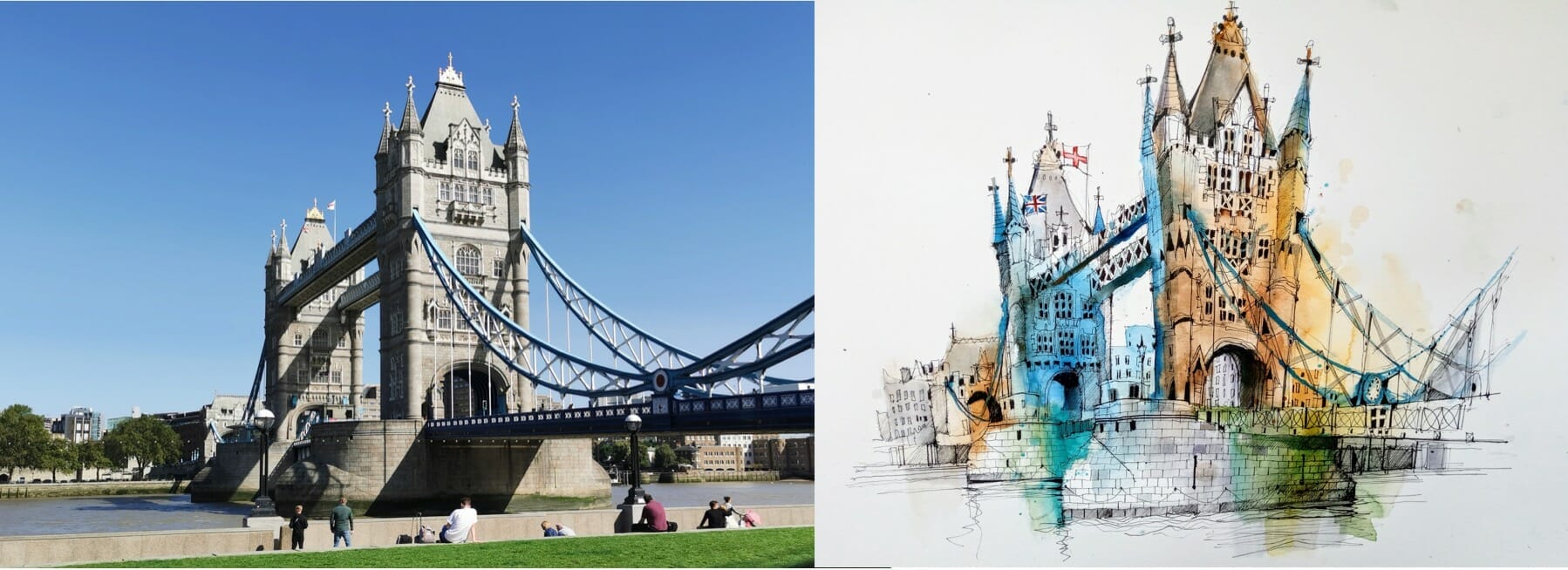
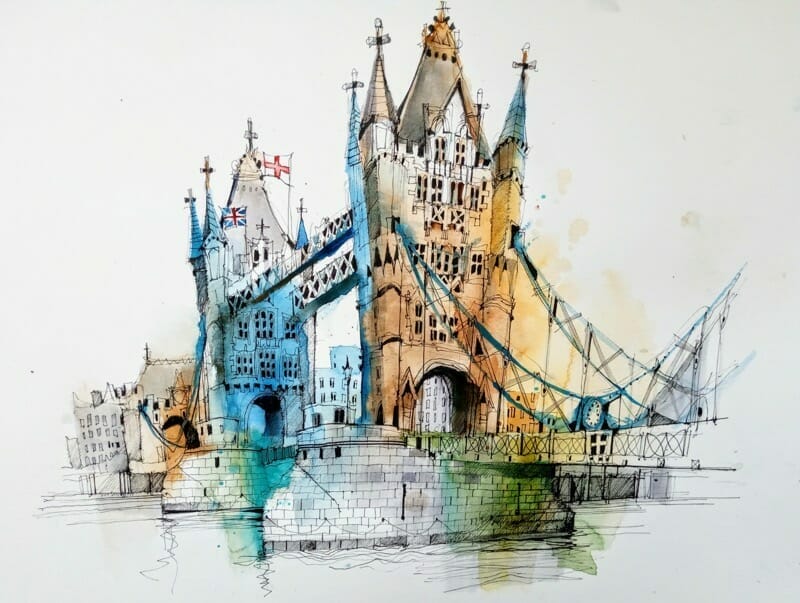
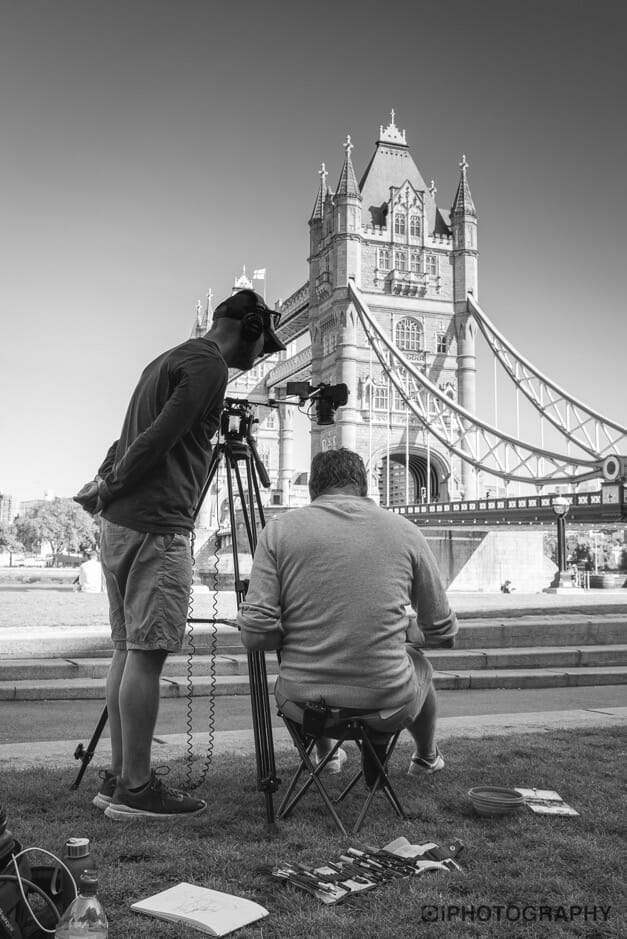
When drawing a structure that possesses the kind of character, history and the iconic shape of Tower Bridge, it's important not to mess with it too much. However, through this special training you'll get to see Ian's approach and learn the steps for creating an instantly recognisable piece of art that's still unique to you.
During this packed workshop, you'll also learn how to invent s that add excitement to your drawings. And you'll discover how to use scale and depth to bring out the character, structure and shape of a building like this, while still paying tribute to its iconic status.
Workshop #5:
ST PAUL'S CATHEDRAL
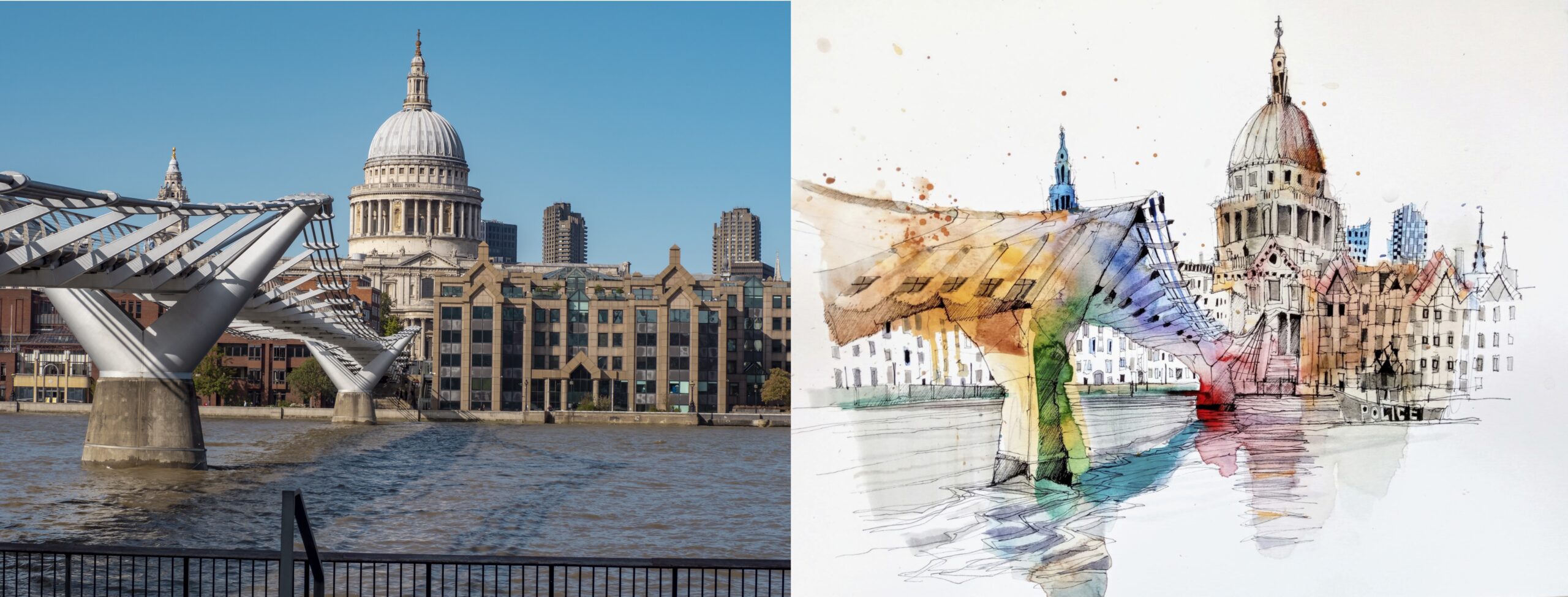
But it's the that becomes the dominant aspect of this workshop. Ian takes you on an amazing creative journey, demonstrating how to incorporate a combination of playful s into your work, such as yellows, golds, greens, pinks and turquoise and then contrasting them with the 'real' s in the scene, to create depth.
You'll then go in with the detail, referencing the relationship between the angles of the newer bridge which sweeps across the Thames to the old dome structure of St Paul's. You'll also get to watch and understand how Ian treats water, while learning the right way to incorporate reflections into your work.
Workshop #6:
SMITHFIELD MARKET
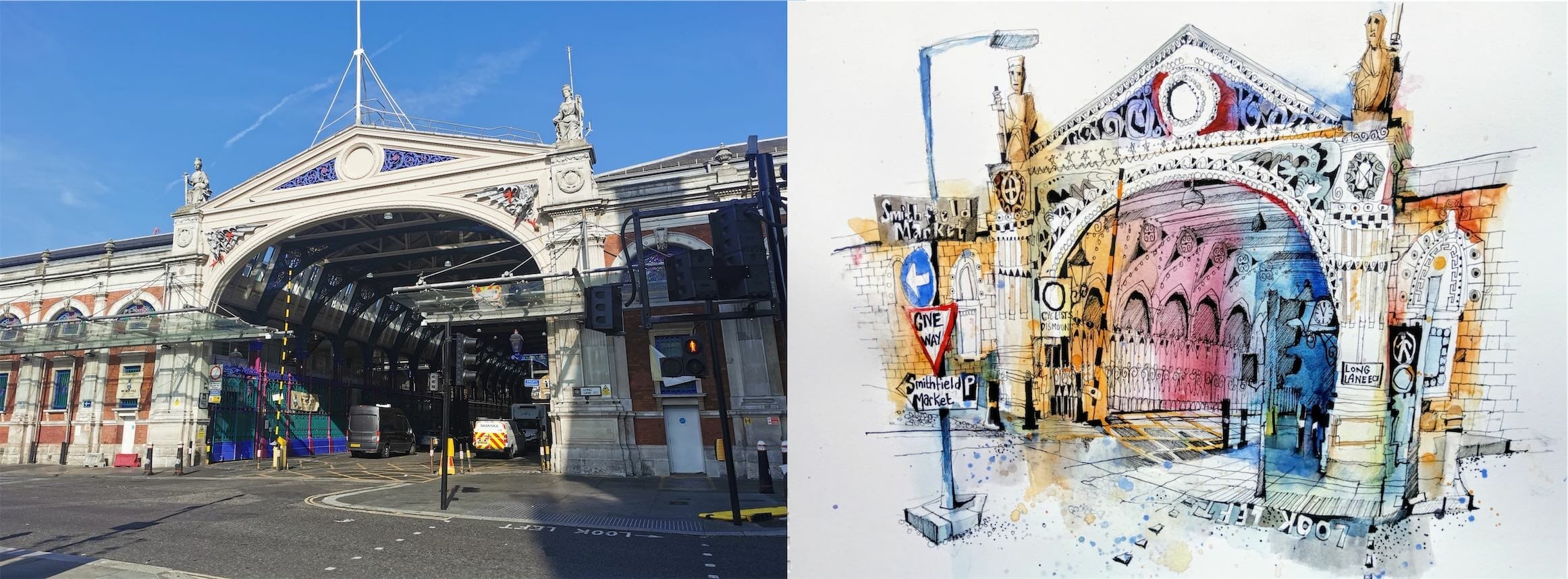
In this workshop, you'll be sketching the grand entrance to Smithfield Market while learning how to incorporate and simplify the intricate detail which draws you in; the statues, the dragons and all the beautiful bits of masonry work.
You'll be using lots of local and learning how to match up those s up to obtain different effects. You'll learn how to break up space to make your work more visually exciting and you'll discover how and why Ian picks out certain items to reference within his drawings. Finally, you'll learn to use some artistic license to bring items into your picture that tell your story of drawing on location!
Our Reviews
But that's not all...
As Well As 6 Packed Workshops You'll Also Get TWO Incredible FREE Bonuses Worth
Bonus 20-Minute Speed Sketch
( Value)
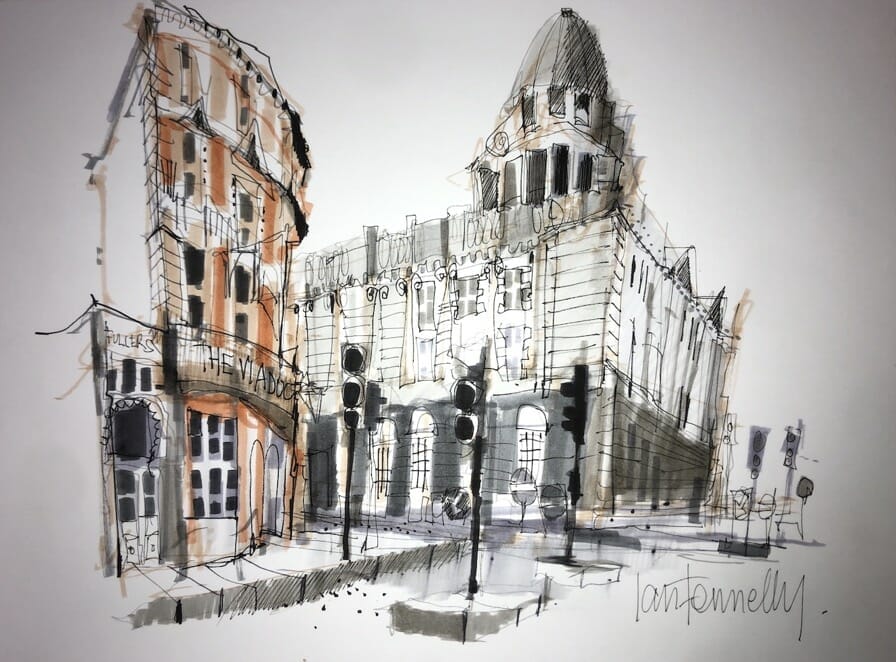
After creating these 6 incredible workshops, Ian made time for one last stop - a 20 minute speed sketch of the infamous Viaduct Tavern; a haunted London pub with a sinister history!
Watch the video below to find out more:
FREE BONUS 2:
Urban Sketchers Feedback Gallery
( Value)
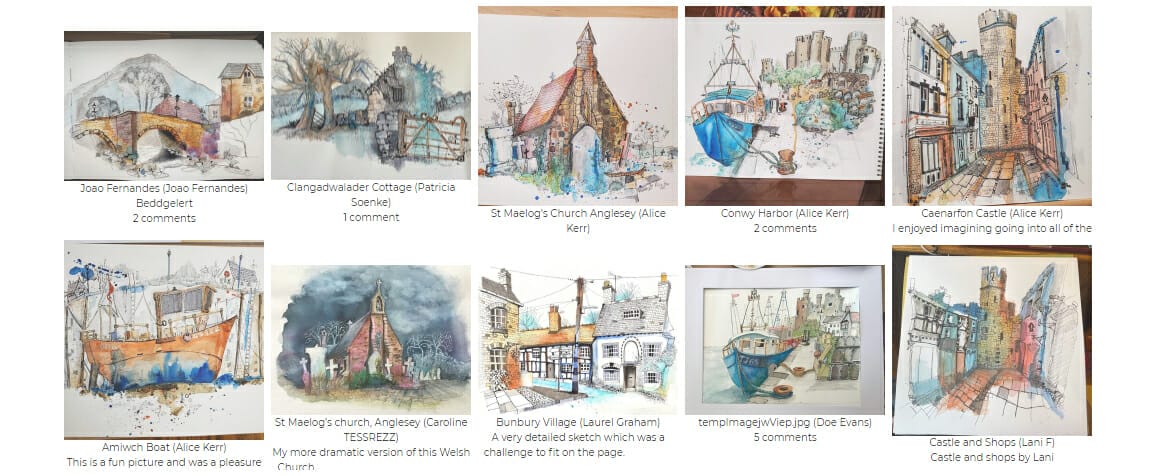
Buy Ian's Beginner's course today and you'll also unlock access to our thriving online feedback gallery.
This is where you can share your work and receive direct feedback from fellow sketchers who are all at different stages of development - from complete beginners to established artists.
There's no better way to learn and build your confidence and skills than to get positive, constructive feedback from supportive, like-minded sketchers!
YOUR MASTERCLASS IN URBAN QUICK SKETCHING!
Creating this course has been a labour of love for Ian. Having lived in London for many years as an art student and then as a professional artist, it holds a special place in his heart.
Going back gave him the opportunity to design a course that's exciting, engaging, entertaining and most importantly...
One that gives you a new simplified methodology for working faster and more fluently - while still achieving remarkable results!
The Greatest Hits of London course is a fun and epic learning adventure. It develops your skills by enabling you to watch over the shoulder of one of the world's most revered urban sketchers, as he guides you through every step in his carefully refined quick sketching process.
If you don't have the luxury of taking several hours out of your busy day to go off urban sketching - then this is the course for you.
Sign UP TO IAN FENNELLY'S GREATEST HITS OF LONDON COURSE TODAY!
For one affordable price, you get instant, lifetime access to all 6 workshops (+ Speed Sketching bonus!). You're getting the same world-class training from the comfort of your home for a fraction of the cost of attending a physical workshop - but with none of the hassle! Best of all, you can watch the workshops over and over again.
GET STARTED TODAY!
Here's What's Included When You Buy This Course Today:
| ✔ 6 workshops delivered by Ian Fennelly | |
| ✔ Downloadable Workfiles | |
| ✔ Bonus 1: Speed Sketch Tutorial ( Value) | |
| ✔ Bonus 2: Urban Sketch Feedback Gallery ( Value) | |
| ✔ 24/7 Lifetime Access. It never expires. | |
| ✔ 30-Day Money Back Guarantee |
Only:
FREQUENTLY ASKED QUESTIONS
Do I need to be an artist to take this course?
Ian assumes no prior knowledge or experience. He has designed this course to enable anybody to start with a blank page, follow-along with his specific steps, develop new skills and produce a piece of work they will be very pleased with. Of course, if you have a certain level of artistic skill, then the techniques that Ian shares will help you to build upon your existing skills and give you a process that enables you to produce great work, in less time.
Can I take the workshops in any order?
Yes. All 6 workshops are accessible from day 1 so that you can pick and choose which ones you work on.
I don't live in London. How will this course help me?
Being a UK based artist, Ian chose London for its rich history, its world famous landmarks, and most importantly - to show you firsthand his methodology for sketching incredible urban artwork, even in the busiest of locations and/or when you don't have a lot of time on your hands.
Urban Sketch has learners from over 70 countries, so everything you'll learn from this course can be applied to almost any location and situation. You'll also be given the images to follow along with at home, as Ian walks you through his process. We think you'll find this course thoroughly enjoyable and we think you'll agree that London was the perfect spot!
Why didn't you include Big Ben in this course?
No one was more disappointed than Ian to not have Big Ben included in this course! Watch the short video below for an explanation as to why Big Ben was not included in London's Greatest Hits:
MONEY-BACK GUARANTEE
We've poured everything into making what we believe are the best and most comprehensive urban sketching courses available.
However, if after signing up for any of our courses you are unhappy for any reason (or no reason at all), just let us know within 30-days and we'll happily issue you with a full refund. No questions asked and no hoops to jump through.
Signing up to our courses is risk-free.