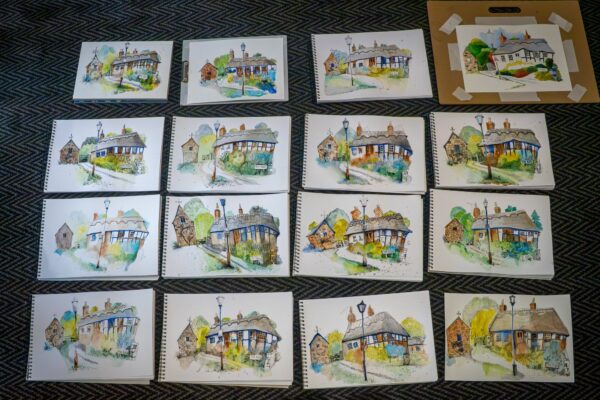
How Sketchbook Size Influences Your Urban Sketching Journey
You open your sketchbook. Pen in hand. And… hesitate.
Is the page too small to capture what you see?
Too big to feel manageable?
If you’ve ever been stuck before making the first mark, it might not be your skill holding you back … it might be the size of the sketchbook you’re using.

Why Sketchbook Size Matters
The dimensions of your page shape everything — how you see, what you include, and how freely you work.
Small sketchbooks feel familiar and safe. You can tuck them into your bag, sketch quickly, and not worry about filling every inch.
Large sketchbooks offer freedom and space — but can feel overwhelming at first. The blank space can be intimidating, especially if you’re still learning.
Here’s the secret: it’s not just about the paper. It’s about how the paper makes you feel.

Benefits of Large Sketchbooks (A3 or A2)
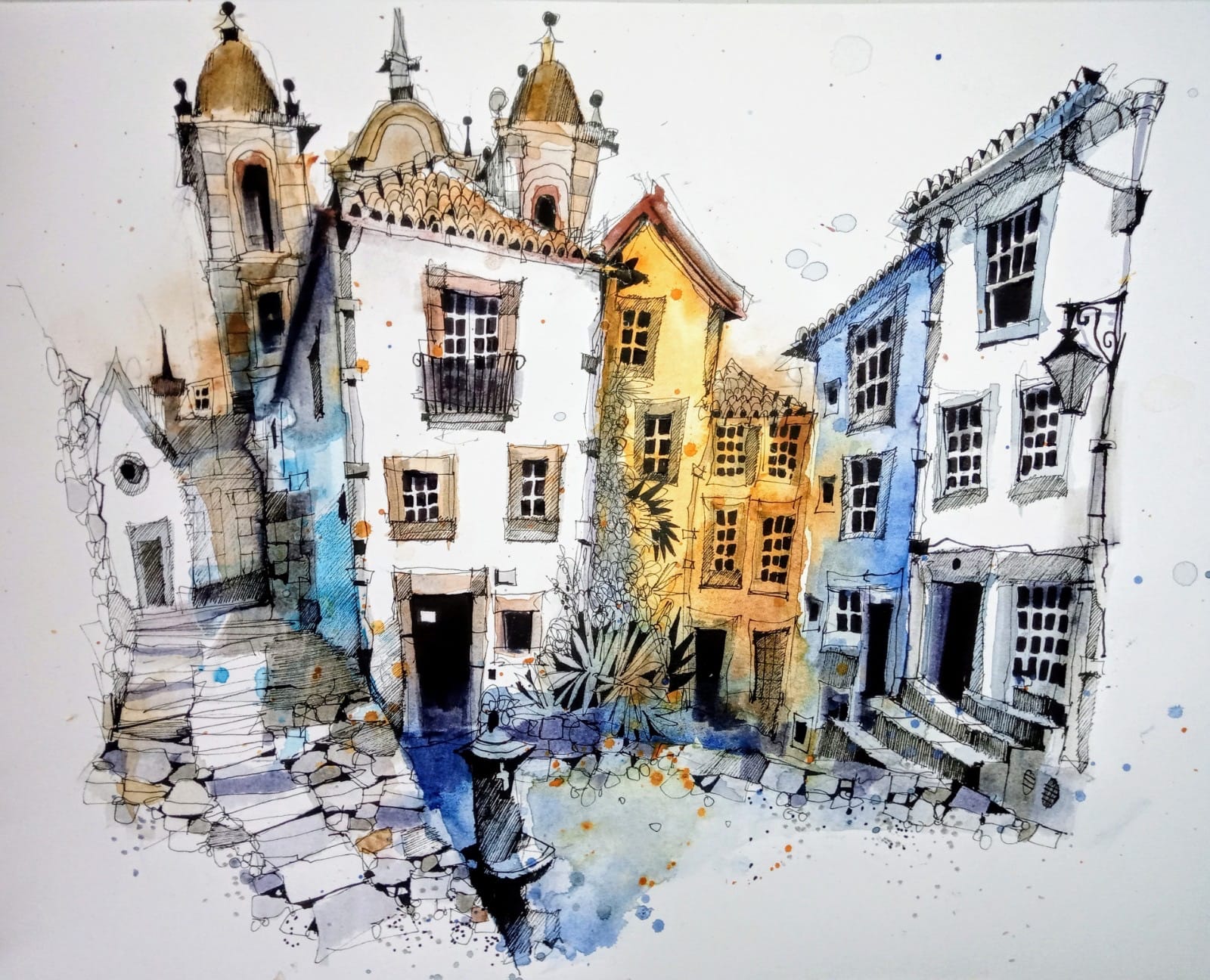
Large sketchbooks give your ideas space to grow. They’re perfect for:
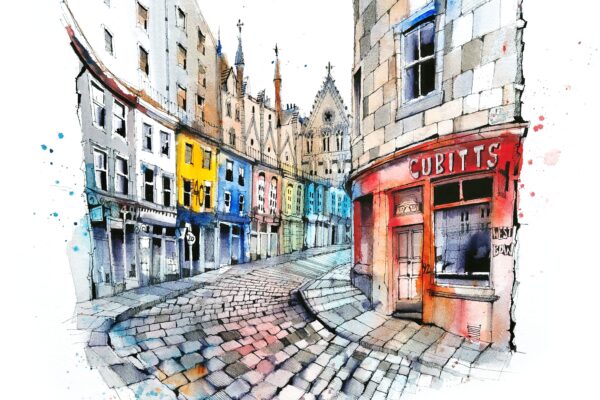
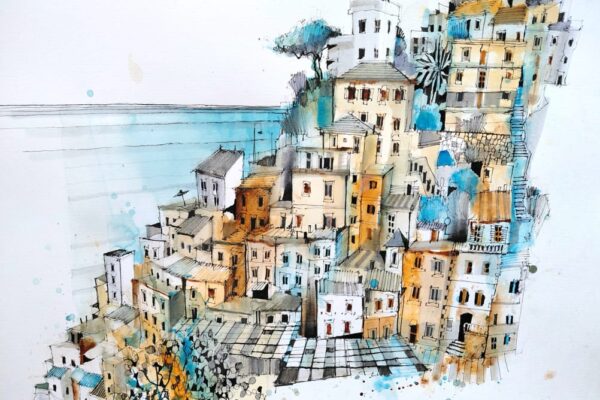
- Capturing detailed urban scenes
- Playing with layered compositions using pen, brush pens, and water
- Exploring perspective without cramping your lines
Pam, one of our sketchers, said:
“I can now see the point of the bigger paper — it gives the sketch more room to breathe.”
Another student, Karen, admitted she was unsure at first but found using a larger format “very rewarding.”
Pro Tip:
Before sketching, place your pens or brushes across the paper to map out the scene — like a rehearsal. This helps you plan your composition without the fear of messing up the first line.

Why Many Urban Sketchers Prefer Smaller Sketchbooks
A4 and smaller sketchbooks work well when:
- You’re sketching outdoors or on the move
- You’re capturing just one detail — a lamppost, a door, or a corner of a café
- You want to stay loose, relaxed, and spontaneous
As Janet shared:
“I like smaller paper better than extra large paper to draw on.”
Smaller formats remove the pressure to “fill the page.” You can suggest rather than explain. Let the sketch breathe.
Pro Tip:
On a small page, choose one part of the scene to focus on. Let the rest blur, fade, or disappear entirely. It’s not about perfection — it’s about presence.

Small vs. Large Page Challenge
Choose a scene – a building façade, a garden corner, or your local café.
Sketch it twice:
- Once on a small page
- Once on a larger format
Notice how each version feels. One might be fast and expressive, the other slow and intricate. Neither is better. But each teaches you something about your style, your rhythm, and what supports your creativity.

Choosing the Right Sketchbook Size for You
Still unsure? Here’s a simple guide:
Use Large Paper (A3 or A2) When…
- You’re working on detailed or layered scenes
- You want to explore perspective
- You’re sketching with brush pens and watercolour
Use Small Paper (A4 or below) When…
- You’re on the go or just warming up
- You want quick, relaxed sketches
- You’re focusing on one subject

It’s Not the Size of the Page - It’s the Permission to Begin
The most important thing?
Use what you have and start.
Big page or small, every sketch is a step forward. A chance to play, explore, and grow — not just as a sketcher, but as someone rediscovering the joy of creating.
Ready to learn more?
If choosing paper size is just one of your sketching worries, you’re not alone. At Urban Sketch Course, we help beginners build confidence, one brushstroke at a time.
From sketching shaky lines to capturing full scenes with pride, our courses (like the Rural Sketch Course with Ian Fennelly) are designed to meet you where you are and gently move you forward.
You don’t have to sketch perfectly.
You just have to begin.