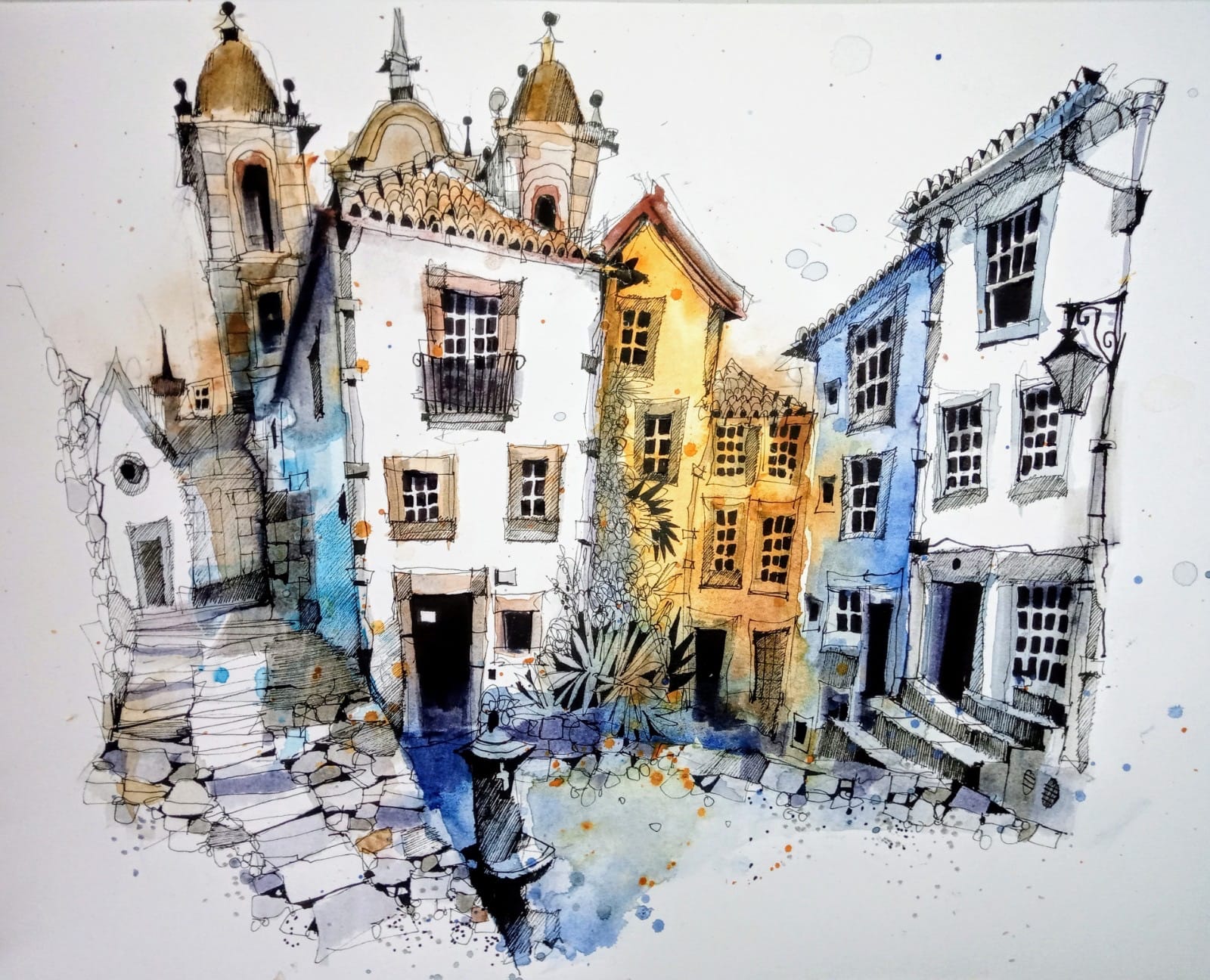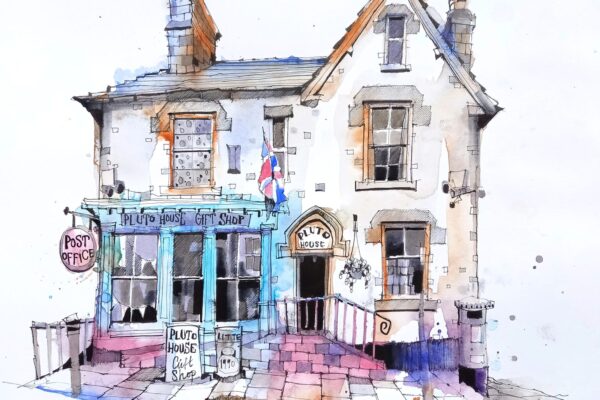
Four weeks. One shared plan. We began with calm planning on a blank page, moved into careful colour, built tone with brush pens, and only then placed detail with purpose. Along the way the group swapped questions, shared fixes, and kept each other going. What follows is the route from first marks to final touches, told through what students noticed, what changed, and what built confidence.
“I gained more confidence from these four weeks than in the previous ten months of learning.”
– Nancy C

Seeing Comes First: placement, confidence, and skills
Every strong sketch begins before the first committed line. Ahead of the live events we offered a Preparation Module with composition exercises, a pen placement activity, and a full pre-sketch workshop. In week one we worked slowly and on purpose. People mapped the curve of the street, marked the eye level, and placed key openings so windows and doors did not drift. Those small checks eased later doubts. When the base is steady, the rest feels easier.
Several students said small placement checks at the edges helped keep the composition centred. Others found that breaking a long roof line into shorter, deliberate segments helped keep angles true and the street less stiff. Some chose to begin in pencil, rub back, and reinforce only the lines that needed to survive water with a permanent liner. Others started in a water-soluble pen and accepted a softer edge later. Both routes worked because the thinking came first.

“Don’t be afraid of working on larger paper. It frees you up"
– Sylvia W
Pace and scale kept coming up. A larger sheet didn’t demand more detail. It simply gave breathing room. Many kept the subject the same size and let the extra margin do the calming. Small checks helped too, like noting top and bottom limits or tapping tiny edge dots to keep placement steady. It felt less like rules and more like finding a layout that gives you space to enjoy the drawing

The first session reminded many that wonky lines are not a crime. They can be full of character when they follow the larger tilt of the scene. One learner put it plainly. It is my sketch, with my wobbly lines. It is not meant to be a carbon copy. That shift in expectation brought relief. It also made space for personal decisions. Which details tell the story. Which can be left as simple blocks. The warm feeling of shared effort helped as well. As one member wrote, hearing everyone else’s struggles and concerns made it feel like we were in it together.
By the end of week one most people had at least one outline they trusted. Some had two or three. That was not duplication. It was practice with purpose. Version one found the route. Version two corrected spacing. Version three often felt calmer and more confident. Those outlines then became the test bed for colour.
Colour With Purpose: harmony, control, and storytelling
Week two can feel uncertain. Broad washes go down, edges soften, and the page can look unfinished. That is normal. This is the middle. The job here is not to complete the sketch. It is to lay a calm base that gives you options for tone and detail later. We kept to a small set of colours for harmony. Two blues for cool notes, a warm trio, and white when an opaque lift would help. Fewer colours meant mixes that belonged together.
Many mixed on the page for natural variety. Cool blue with a touch of warm red gave useful street neutrals. Warm orange with ultramarine made stone that sat back. Blue and yellow laid together, then softened with clean water, gave a fresh green. Restraint did most of the work. Distant shapes stayed lighter, a few clean whites were saved, and stronger colour was kept for natural focal points

This is also when many worry the page looks messy or half done. A few called it the ugly stage. That feeling is common. A steadier second pass often changed the mood. Once the first washes settled, colours felt calmer, cobbles began to read, and drawing and paint supported each other. It was less about fixing and more about letting the middle do its job before tone and detail arrived
Watercolour has always been a mystery to me, but I started to understand washes and building layers.”
– Vicki T
The homework made this practical. The colour mixing exercises asked everyone to test warm and cool pairs, note which mixes drifted to brown and which stayed neutral, and practise softening hard edges with clean water. A colour pass on a spare outline let the practice sheet carry the risk. By the end of week two the sketches looked loose and alive. Not finished. Ready. That readiness set up tone.
Tone that shapes space
Week three was about shaping the scene with warm and cool greys, adding depth without crushing the colour. Brush pens are quick and blendable but they reward restraint. First decide where tone belongs: under eaves, inside doorways, at the base of stone, along the sweep of the road. Then decide how strong: a light pass for form, a second for depth, a small pop of black to anchor a key edge. Too much can flatten the surface and hide the colour laid in week two.

We started with the road, letting hatching follow the camber: tighter lines in the foreground for weight, more open strokes up the street for lightness, and vertical hatching at the curb to show the drop. On walls and shopfronts the brush pen’s fine tip suggested texture without bulk. Mid greys kept signage readable, and a light blend calmed any loud note.
Balance mattered. It was easy to get carried away, so we built a habit of stopping. Look back. Compare left and right. Ask if the buildings still feel solid without becoming heavy. Several members said this was where learning jumped forward. The critique at the start of the session showed how a small shift in tone can set a door back or firm up a window frame. Hearing that in real time helped people see their own pages differently later. That is the value of shared sessions and personal feedback. It shortens the time between doubt and answer and lets you return in the week with a clearer plan.
“My best learning was how to make shadows and how to create depth with blending the Tombows.”
– Lori B
By the end of week three, pages had a stronger sense of three-dimensional form. The buildings felt grounded. The road read as a surface rather than a flat band. For many, tone fixed uneasy passages from earlier steps and added the depth and dimension the sketch needed.

detail That Matters: clarity, restraint, and personal feedback
Week four is where many try to fix everything with texture. We did the opposite. Detail clarified what was already there rather than cramming in every brick and bolt. The method stayed simple.
We sharpened key edges, thickened joins where two lines met so corners felt weighty, used perspective-led hatching only where it helped the form, and kept railings, brackets, lamps and signs readable. The aim was to suggest more than we described.
We also varied the approach across the page. On the road we alternated tight hatching with open lines so the sweep stayed alive, and kept curb hatching vertical so the drop read clearly. On shop fronts we framed windows and doors, paused, then added only what helped. Repeated upper windows were simplified to keep rhythm without crowding
“This sketch is the one I’ve learnt the most from, especially really looking at the direction of brickwork and cobbles.”
– Cathryn A

Some lightened a small area before redrawing. A clean wet brush and paper towel lifted colour and any soluble ink. Once dry, a 0.2 or 0.1 fineliner re-defined the edge. Small fixes like this led to better decisions. Many noticed how a lighter patch can give the eye a resting place. Others preferred to hold back and let earlier layers carry the weight. Both choices work when they serve the picture.
This was also the week that showed the benefit of the staged plan. Because the outline was secure, the colour had a job to do. Because tone shaped the scene, the detail did not need to be heavy. Knowing there would be a short tidy pass at the end made it easier to stop before overworking.
The last ten minutes became a habit of checking. Scan the page. Link textures so no area floats alone. Adjust a line weight here. Add a small shadow there. Then stop. Sign and date. The sketch is finished because you decided what matters.

Together We Improve: community, friendship, and confidence
Learning alone can be slow. Learning together is quicker and kinder. Each week the chat kept people moving with real questions, simple fixes, and steady encouragement. The live rhythm helped too. Join when you can, rewatch when you need, and use the week in between to try a second pass. That pattern built confidence without the pressure to get it right in one go.
The critiques proved their worth. Seeing a problem explained on someone else’s page often unlocked the same issue on your own. Small observations made things click, like firming a curb so it reads cleanly or keeping hatching direction consistent so the road feels believable.
“Hearing everyone else’s struggles and concerns made me feel better and we were all in it together.”
– Karyn H
Community was the heart of it. The chat bubbled with shared ideas, quick tips, and kind words that took the pressure off. People compared notes on wobbly lines, swapped hatching tricks, and cheered when a wash ran wild. It felt like sketching with friends round the table, whether you were new to this or finding your rhythm again.
“As a beginner I felt supported, and the live energy helped me keep going between weeks.”
– Gail G
By the end many were not only drawing better but working with more calm and purpose. A clear plan, a friendly group, and regular feedback turned four sessions into real progress. The chat and critiques kept people motivated, and the friendships in the comments made it easier to return and try again. You could borrow a tip, test it that evening, and see a real change on the page. What began as four live sessions became a habit you can carry into any sketch, supported by community, friendship, and personal feedback.
Ready to learn more?
Our Edinburgh Four-Week Sketching Experience may have wrapped up, but there’s still plenty to explore in the Urban Sketch PLUS members’ area before the next one begins. Whether you’re working on linework, tone, colour, or composition, you’ll find a workshop, webinar, or training session to help you keep moving forward – at your own pace, in your own way. And if you’re craving that live energy again, keep an eye out for upcoming sketch workshops where you can join in real-time, sketch alongside others, and keep that creative momentum going.