When you’re starting out with urban sketching, you might hear terms like negative space and white space. While they may sound similar, these two concepts have unique roles in helping you create balance, focus, and clarity in your sketches. Understanding the difference between them can unlock new levels of creativity and compositional skill.
Let’s dive into what makes negative space and white space distinct and how you can use them in your artwork.

What Is Negative Space?
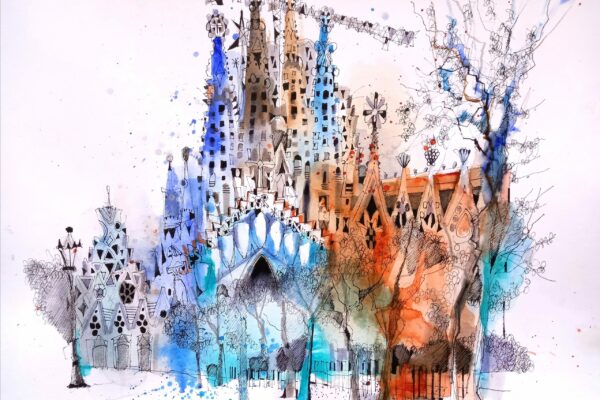
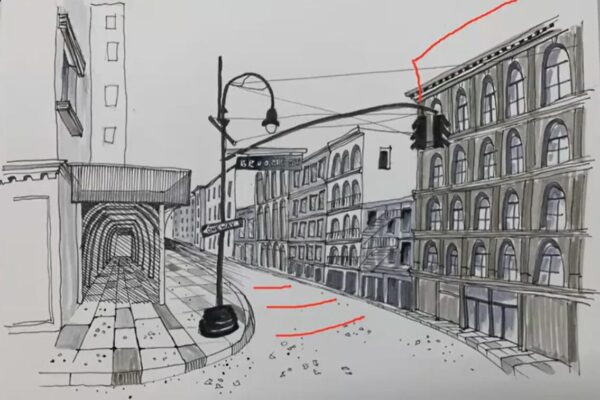
Negative space is the area around and between the main subjects of your sketch. It’s not the focal point itself but rather the “empty” space that helps define the objects you’re drawing. For example, in a cityscape, the gap between two buildings or the sky visible through tree branches would be considered negative space.
How To Use Negative Space:
- To Capture Proportions and Relationships: By focusing on the shapes of the spaces around objects, you can better judge distances and angles, making your sketch more accurate.
- To Create Balance: Too much negative space can feel sparse, while too little might make the scene feel cramped. Striking the right balance guides the viewer’s eye naturally through your composition.
- To Enhance Depth and Clarity: Including areas of negative space helps emphasize your main elements and makes the sketch feel less overwhelming.
Pro Tip: Next time you’re sketching, try flipping your focus and draw the shapes of the spaces around your subject first. It can be a surprisingly helpful way to frame your composition.

What Is White Space?
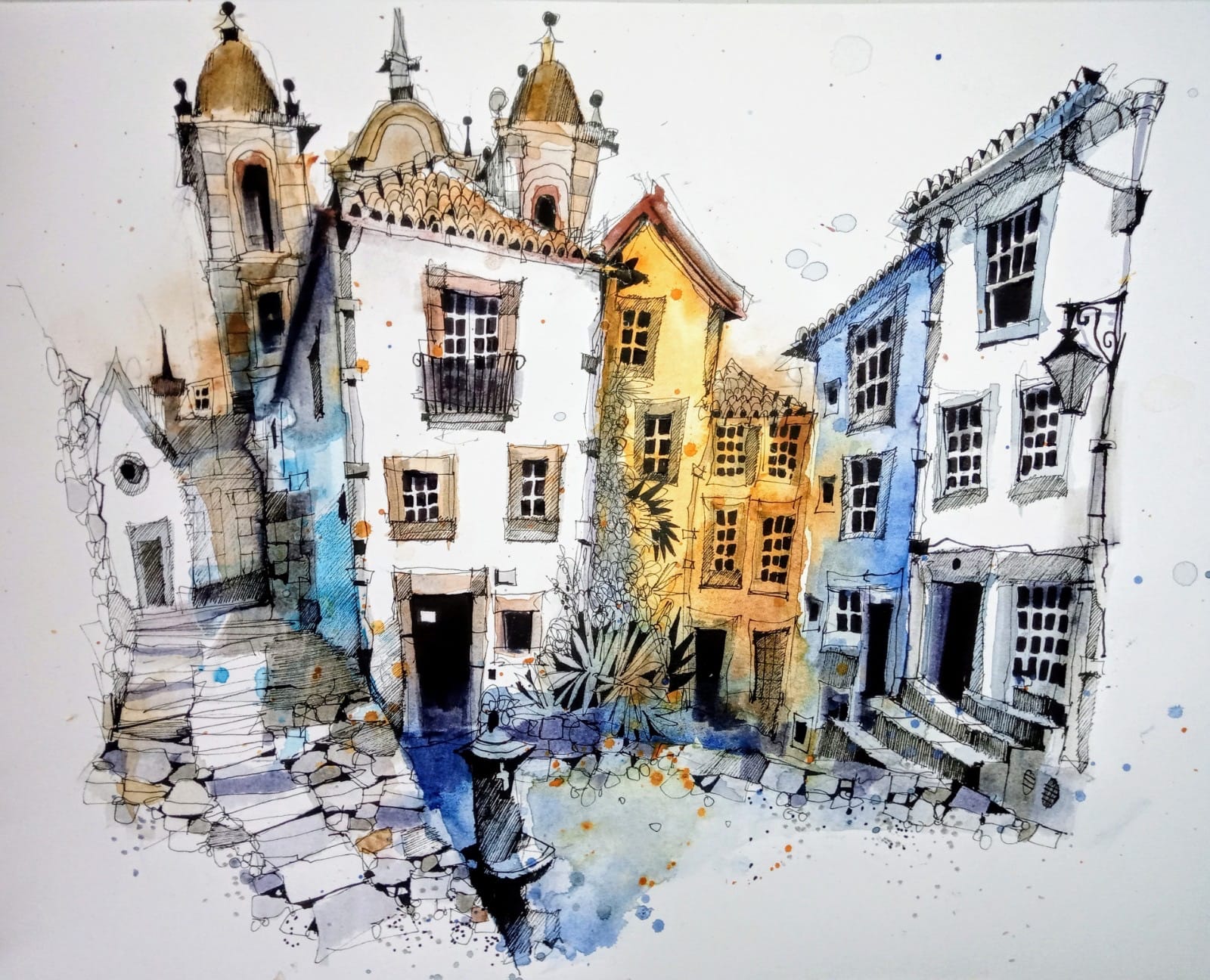
- To Highlight Focal Points: Leaving blank areas around detailed parts of your sketch draws attention to them.
- To Suggest Simplicity or Mood: A deliberate use of white space can create a minimalist vibe or evoke a feeling of openness and calm.
- To Break Up Complexity: Urban scenes can be visually dense, and white space gives your viewer’s eyes a chance to rest.
- Represent Light and Openness: Leaving parts of the sketch untouched can create a sense of brightness or spaciousness.

The Key Differences
Negative Space
- Space shapes and defines your main subjects.
- Is about understanding and depicting what surrounds your objects.
- Helps with accuracy and structure.
- Is a creative design element that adds balance and contrast.
- Simplifies the scene and avoids visual clutter.
- Creates mood, emphasis, and aesthetic appeal.

Using Both in Your Urban Sketches
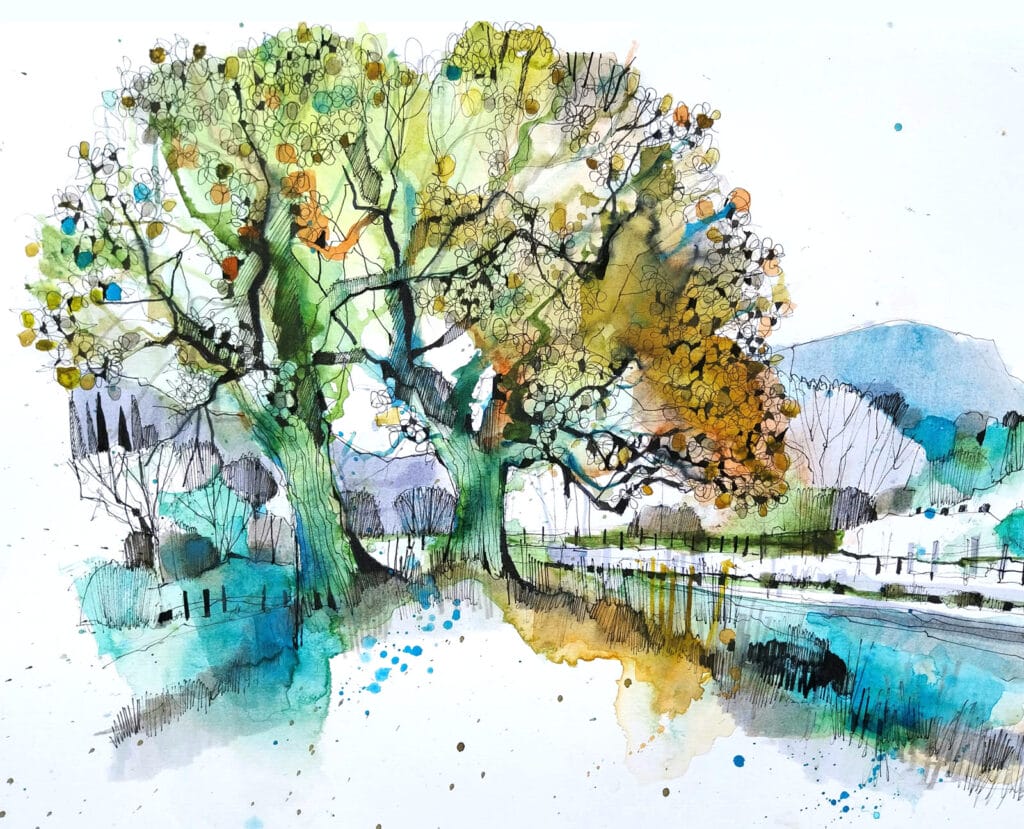
By combining negative space and white space, you can create a harmonious composition that feels both structured and expressive. For example, take this image from our Rural Sketch Course. The negative space is the sky between the tree branches, the space between the two trunks and the spacing of the river bed, helping to define the shape and placement. At the same time, leaving a blank area of white space at the bottom of the scene, or within the mountains in the background forms balance within the composition and draws focus to a detailing of the two main trees.
Both techniques allow you to go beyond simply drawing what you see – you can convey how the scene feels.
Next time you head out to sketch, keep an eye on the spaces. Look for the shapes around objects (negative space) and decide where you might intentionally leave parts of the page blank (white space). With practice, these tools will become second nature, and you’ll find your sketches gaining a sense of depth, balance, and storytelling.
Ready to learn more?
Learn the art of urban sketching with Ian Fennelly in our Beginner’s course as he guides you through 47 easy-to-follow lessons, with practical exercises, that transform you from complete beginner to skilled urban sketcher!