When a Sketch Stops Being Practice and Starts Carrying Meaning
Most sketches begin without much ceremony.
You open the book, settle somewhere, and start drawing what is in front of you. A building, a corner, a doorway, a familiar view. At that point, the sketch has a simple job. It helps you look more closely. It fills time. It teaches your hand something new.
For a while, that is enough.
But every now and then, something shifts. Not because the drawing suddenly looks impressive, but because someone else enters your thoughts while you are working. You realise the place on the page is tied to a shared walk, a conversation, a memory that still carries weight. The sketch stops being only about learning and becomes something quietly personal.
That moment often brings hesitation. Up until now, the sketch has been private. Safe in the book. The idea of giving it away can feel exposing, especially for those of us who sketch later in life and were not encouraged to treat creativity as something to share.
And yet, this is where gifting a sketch begins to matter.
Not because it turns the drawing into “art”, but because it turns the act of sketching into a form of connection.

Why Does Gifting a Sketch Feel So Different?
On the surface, a sketch seems like an unlikely gift. It might be loose. Lines wander. Colour behaves unpredictably. Perspective does its own thing. None of this fits neatly with the idea of a “proper” present.
And yet, when someone receives a sketch made for them, the reaction is often immediate and emotional. There is usually a pause. Sometimes a smile. Often the question, You made this?
That response is not about technique.
A sketch shows time spent. It shows attention. It shows that someone stayed with a subject long enough to draw it. The stops and starts are visible. The decisions are visible. Even the uncertainty is visible.
Unlike something bought, a sketch cannot hide its making. It brings the person who created it directly into the room.
That is why gifted sketches often feel so personal. They are not neutral objects. They are small pieces of storytelling, holding both the subject and the act of noticing it.

Sketches Hold Memories, Not Just Images
A sketch does not simply show what something looks like. It shows how it was experienced.
This is why sketches are so closely tied to memories. A drawn place is rarely just a place. It carries the light that day, the weather, the pace of the walk, the conversation that happened nearby. All of that sits quietly behind the lines.
When someone receives a sketch, they often recognise this instinctively. Even if they have never drawn themselves, they understand that the sketch is not a copy. It is a record of attention.
One member of the community shared how she sketched a scene her travel friend had photographed while hiking near the Zelvo Open Air Museum in Turkey. She was meant to be there herself, but life got in the way. The sketch became a way of still being part of that moment. What stayed with her most was not just giving the drawing, but knowing her friend framed it and hung it in her home. That simple act turned a sketch into something lasting, a shared memory given a place to live.
This is what sketches do so well. They hold memory without explanation. They allow someone to recognise a moment instantly, without needing words.

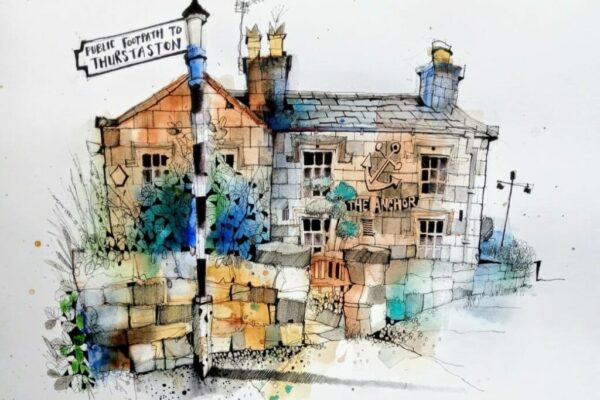
This sketch was created for a dear friend, and it felt so special to bring her beautiful home to life on paper. I chose this angle as it creates a lovely lead in to the house and shows the house name, rather than lots of grass. I remembered some of Ian's techniques..... It’s such a joy to capture a place that holds so much meaning. I hope she likes it.
– Student Asmita K
What We See in the Community Again and Again
Within the urban sketching community, stories about gifting sketches appear quietly and often. They rarely arrive as announcements. More often, they surface in passing. A comment under a post. A shared image. A small admission.
Someone mentions turning a few simple sketches into Christmas cards. Another shares that a drawing now hangs in a friend’s hallway. Someone else admits they were nervous handing a sketch over, unsure how it would be received.
One member described how a small festive sketching challenge turned into something unexpected. Twelve tiny sketches of everyday moments. Lanterns, details, bits of light and humour. They were done for enjoyment, nothing more. But they quietly became Christmas cards. The joy was not in producing them, but in realising how much warmth and story those small drawings carried. The sketches reminded her why she loves sketching in the first place. Not for polish, but for noticing and storytelling.
I just finished a sketch of a friend’s childhood home at Christmas his wife asked me to capture for him. I think she’s using it for their Christmas cards too
– Student Joanie C
In that moment, the drawing stopped being “just something I did” and became part of someone else’s story.
Across these examples, one thing stays consistent. Gifting a sketch is never about showing off skill. It is about recognising shared meaning.

How Gifting a Sketch Changes the Way You See Your Own Work
This is one of the least talked about aspects of gifting sketches, but it matters deeply.
When a sketch leaves your book, it changes status. It is no longer invisible. It exists in someone else’s space. That can feel uncomfortable at first, especially for sketchers who are private or self-critical.
But many people notice something unexpected afterwards.
The next sketch often feels calmer. Less tight. Less concerned with proving anything. Almost as if the act of sharing has lifted some pressure.
This shift does not happen because the sketch was praised. It happens because it was accepted.
For many people, particularly those sketching later in life, this matters more than they realise. Gifting a sketch reframes what the work is for. It stops being only about improvement and becomes part of a relationship.
In this way, gifting a sketch can feel like giving yourself permission as well. Permission to be seen. Permission to let work exist without constant judgement. Permission to keep drawing.

Keeping Gifting Grounded and Manageable
If the idea of gifting a sketch feels appealing but daunting, the key is to keep it simple.
Start with subject, not skill. Choose something meaningful to the person receiving it. A place they know well. A view tied to a shared memory. Recognition creates connection far more reliably than impressive technique.
Presentation helps, but it does not need to be elaborate. A simple frame or mount shows care without overpowering the drawing. The aim is not to make the sketch look expensive, but to show that it is worth keeping.
Cards remain one of the easiest ways to share sketches. They allow work to be seen without demanding permanence. A card can be displayed for a while, kept in a drawer, or passed on. That flexibility suits many people.
Small printed items can work too, as long as the intention stays clear. A bookmark used daily. A calendar revisited throughout the year. These allow sketches to continue their storytelling quietly, without becoming products aware of themselves.
And if the technical side feels overwhelming, it is worth remembering that community extends beyond drawing. Printers, local makers, or fellow sketchers often enjoy being part of the process. Asking for help does not dilute the gift. It reinforces it.

Community, Friendship, and Shared Stories
Urban sketching has always been about more than drawing buildings. It is about shared looking. Slowing down together. Seeing ordinary places as worth noticing.
Gifting sketches extends that idea beyond the page. A sketch on a wall becomes a conversation. A drawing on a desk becomes a reminder of connection. These objects carry friendship and shared experience in a way that words sometimes struggle to do.
Within a community, these moments matter. Seeing others gift their work creates permission. Not obligation, but possibility. It quietly reinforces the idea that sketches do not have to stay hidden forever.
For many sketchers, especially those returning to creativity later in life, this sense of belonging is as important as technical progress. Sketching becomes less about solitary improvement and more about shared storytelling.
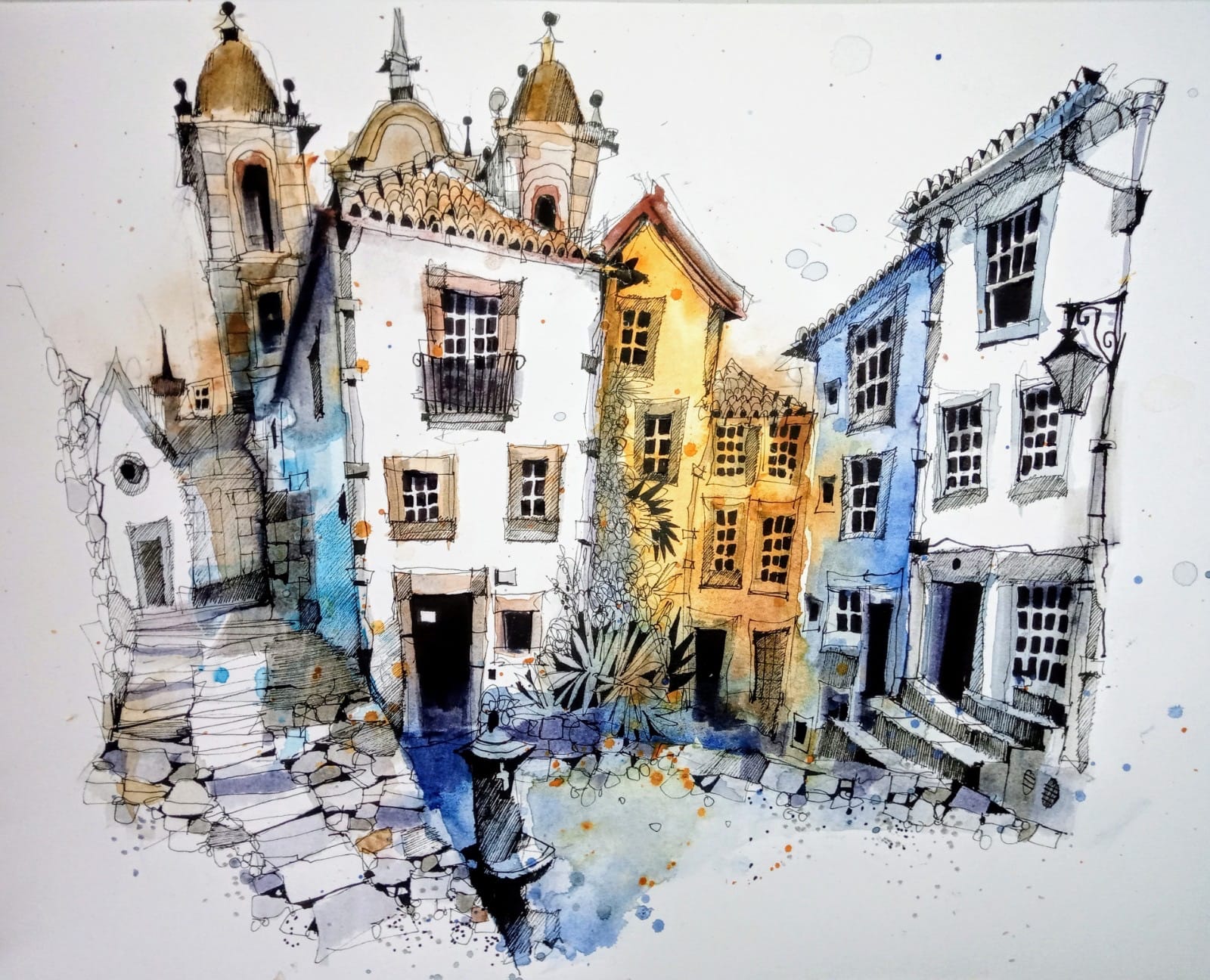
As a gift this Christmas Ian kindly gifted me one of his original sketches. I chose a scene from our sketching retreat to Seville, so I could look at it and think about the memories we all had together on this trip.
– Team Member Kayla J

Final Thoughts: Letting Sketches Have a Life Beyond the Book
Not every sketch needs to be gifted. Privacy matters. Practice matters. Sketchbooks should remain safe places to experiment, fail, and explore.
But sometimes, a sketch asks for more.
When that happens, it is worth listening. Gifting a sketch is not about confidence or bravery. It is about trust. Trust that what you noticed matters. Trust that someone else might recognise themselves, or their memories, in your lines.
In a world full of quick purchases and replaceable things, a sketch remains stubbornly human. It cannot be rushed. It cannot be replicated exactly. And once given, it carries both the moment it was made and the relationship it represents.
That is why gifting a sketch often means more than a shop-bought gift ever could. Not because it is art, but because it is personal. Because it holds memories. And because it reminds us that what we make can live on, quietly, in someone else’s life.
If you do gift a sketch, notice what happens next. Not just for the person receiving it, but for you. That moment is often where something gently shifts.
Ready to learn more?
If you do not feel ready to gift your own sketches just yet, we also have a range of sketching-related gifts available. From original Ian Fennelly sketches and open edition prints to Ian’s collection of inspiring books, there is something to suit anyone who enjoys sketching.