There’s something humbling about opening your sketchbook, spotting a scene that looks perfect, and then-oops-the building’s leaning, the tree looks more like a green blob, and your bench just got photobombed by a dog walker.
We’ve all been there. Even Ian Fennelly.
The truth is, urban sketching rarely goes to plan. But there’s a trick up Ian’s sleeve that makes all the difference…a pre-sketch.

What’s a Pre-Sketch (and Why Bother)?
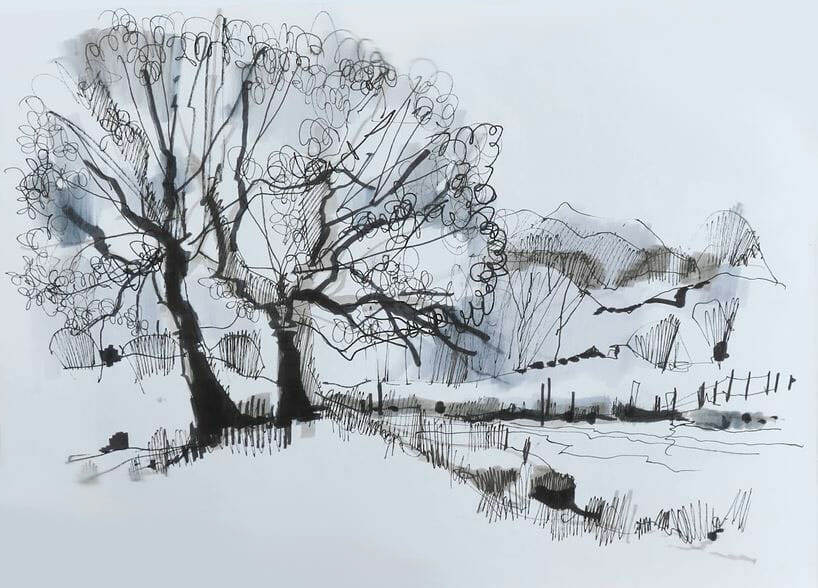
Think of a pre-sketch like a warm-up. It’s a quick, loose sketch you do before diving into your “real” drawing.
You’re not aiming for perfection, we’re aiming to figure things out:
- What matters in the scene?
-
What can you leave out?
-
How do you fit it all on the page?
It’s a quiet, thoughtful moment that helps you see like an artist – not just look.
Case in Point: Brighton Pier

“What we’re trying to do in a pre-sketch is simplify it, so that when we do the workshop piece, I know exactly the route that we’re going to take. Where we’re not over-layering everything, and making it too complicated, we’re just letting things go and really capturing the essence of the scene.”
– Ian Fennelly
It Even Works with Animals
In Ian’s Urban Zoo Sketching Course, he tackled something even trickier than buildings: animals. (Spoiler alert: they don’t stay still.)
Pre-sketching helped him:
- Capture texture and form – the leathery folds of a rhino, the soft fluff of a red panda.
- Understand light and shadow – how it slid along a giraffe’s neck or pooled beneath a lion’s belly.
- Choose the right materials – crisp pen for zebra stripes, loose watercolour for soft fur.
Why Pre-Sketching Works
- Notice the Little Things From the texture of brick to the shape of a lamppost, sketching first helps you see more clearly.
- Decide What Matters You don’t need to draw everything. A pre-sketch helps you choose what earns a spot on the page.
- Work Out the Composition Some scenes are awkward – busy on one side, empty on the other. Pre-sketching lets you find balance before committing.
- Stay Present Urban sketching isn’t just visual – it’s sensory. That breeze, those seagulls, the chatter behind you… it all seeps into your sketch when you’re tuned in.


The Practical Payoff
And here’s the less glamorous, but very real truth:
Sometimes, the best view is also the worst spot to sketch from. It’s too windy. Too crowded. Or just plain uncomfortable.
Ian’s solution? Do a pre-sketch. Then find a better spot and use what you’ve learned to guide the final piece. No “perfect” location required.

Final Thoughts: Don’t Skip This Step
So next time you’re in the city, at the zoo, or even your own back garden—take a breath and do a quick pre-sketch.
No pressure. No perfection. Just observation, curiosity, and a little preparation that goes a long way.
As Ian calls it, it’s your “safety net.”
Give It a Try
Grab your sketchbook and do a 5-minute pre-sketch today. Doesn’t matter what it’s of—a garden chair, a plant pot, a crooked shed. Just start. Observe. Scribble.
And watch what unfolds.

Ready to learn more?
Learn the art of urban sketching with Ian Fennelly in our Beginner’s course as he guides you through 47 easy-to-follow lessons, with practical exercises, that transform you from complete beginner to skilled urban sketcher!