A gentle guide to choosing A4, A3 or A2 at home
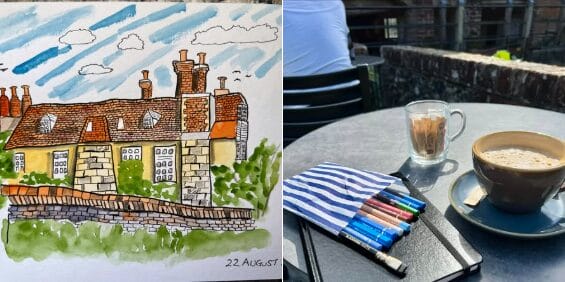
Steam on the kettle. A photo propped against a mug. A sketchpad waiting, tape ready for a clean border.
You sit down to sketch… but pause. What size paper should I use for urban sketching?
It sounds like a small decision, but it can shape the entire experience.
Some sketches feel right on a compact page. Others need space to stretch out and breathe. So how do you decide?
Let’s explore how to choose between A4, A3 and A2 and how to translate those sizes if your sketchpad uses inches.
Let the Scene, and Your Mood, Guide You
Choosing the right sketchbook size isn’t about rules.
It’s about what the moment calls for: how much time you have, what story you want to tell, and where you’ll be working.
Try this simple guide:
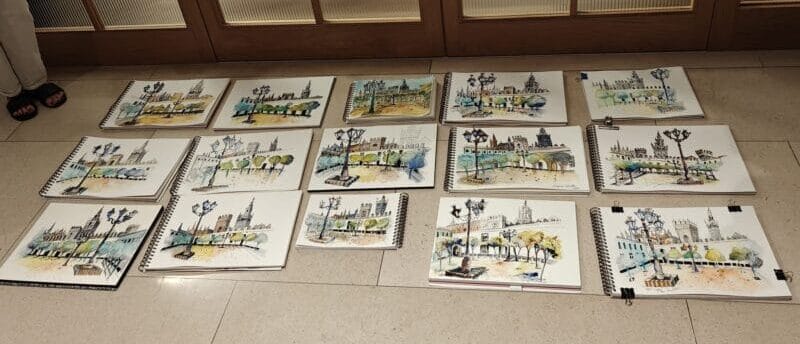
A4 (8.3 x 11.7 inches): Ideal for short sessions with one clear subject. Quick, tidy, and finishable. Perfect for thirty minutes and a cup of tea.
A3 (11.7 x 16.5 inches): Spacious enough for a full street scene or layered landscape without overwhelming your table.
A2 (16.5 x 23.4 inches): Best for slow, immersive work. Think of something you might frame, or a piece you build across a few peaceful sessions.
“The small format was a challenge, when I’m back home I’ll try it again on A3 and use bolder colours.”
– Corinne.
If Your Paper’s in Inches...
Not all pads use metric sizing. So if your sketchpad is in inches, here’s a quick translation:
| Metric (A Sizes) | Inches (Approximate) | Notes |
|---|---|---|
| A4 | 8.3 x 11.7 | Everyday printer paper size |
| A3 | 11.7 x 16.5 | Two A4s side by side |
| A2 | 16.5 x 23.4 | Two A3s stacked |
Similar U.S. pad sizes:
8.5 x 11 is close to A4
9 x 12 or 11 x 14 fall between A4 and A3
12 x 18 is close to A3
18 x 24 is near A2

The Bigger the Page, the Simpler the Composition
“I can now see the point of bigger paper. It gives the sketch room to breathe. I might find some A2.”
– Pam
“Larger pieces have greater visual impact, but gestures must be broader. They’re better suited to a fixed studio.”
– Julie

Feeling Daunted by A3 or A2? Start Small and Grow
If you’re nervous about using a bigger sheet, try this simple approach inspired by Ian Fennelly’s method:
- Warm up on A4.
Choose one focal point, like a sign, a window, or a chimney, and finish it without overthinking. - Step up to A3.
Tape a clean border. Add three lines: a roof line, a ground line, and one vertical. This sets scale and calms the blank page. - Sketch the big shapes with 10 lines or fewer.
This encourages confidence and prevents over-detailing. - Leave white space around the edges.
A clean margin creates calm. If the scene still has more to offer, try it again on A2. There’s no need to cram it all into one page.

Match Your Paper to the Story You’re Telling
- A tight crop suits A4
- A generous margin suits A3
- A scene with open sky or deep perspective suits A2
Resist the urge to fill every inch. Instead, go for:
- Clearer shapes
- Stronger midtones
- Detail only where the eye wants to rest
A Note on Surface: Hot Press vs. Cold Press
Size matters, but texture helps too.
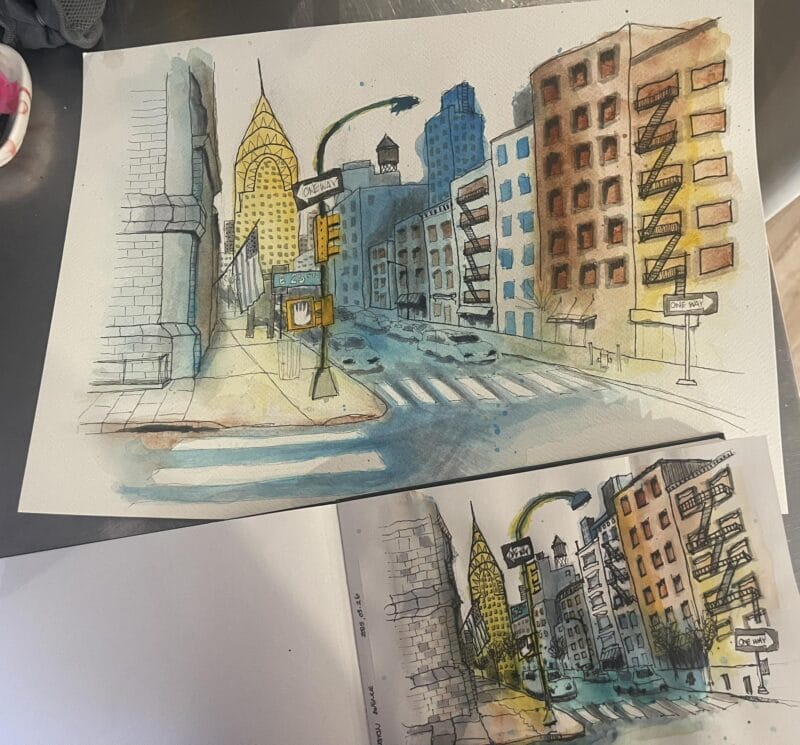
- Hot press is smooth and crisp. Perfect for detailed line work, especially from photos.
- Cold press (or “not”) has a gentle texture. Great for loose washes and bold brush marks.
- Heavy stock resists buckling. If you plan to work with big skies or layered glazes, stretching the paper helps it stay flat.

Still Wondering What Size Paper to Use for Urban Sketching?
“I’ve started carrying a Seawhite A5 landscape and I can’t recommend it enough.”
– Gary