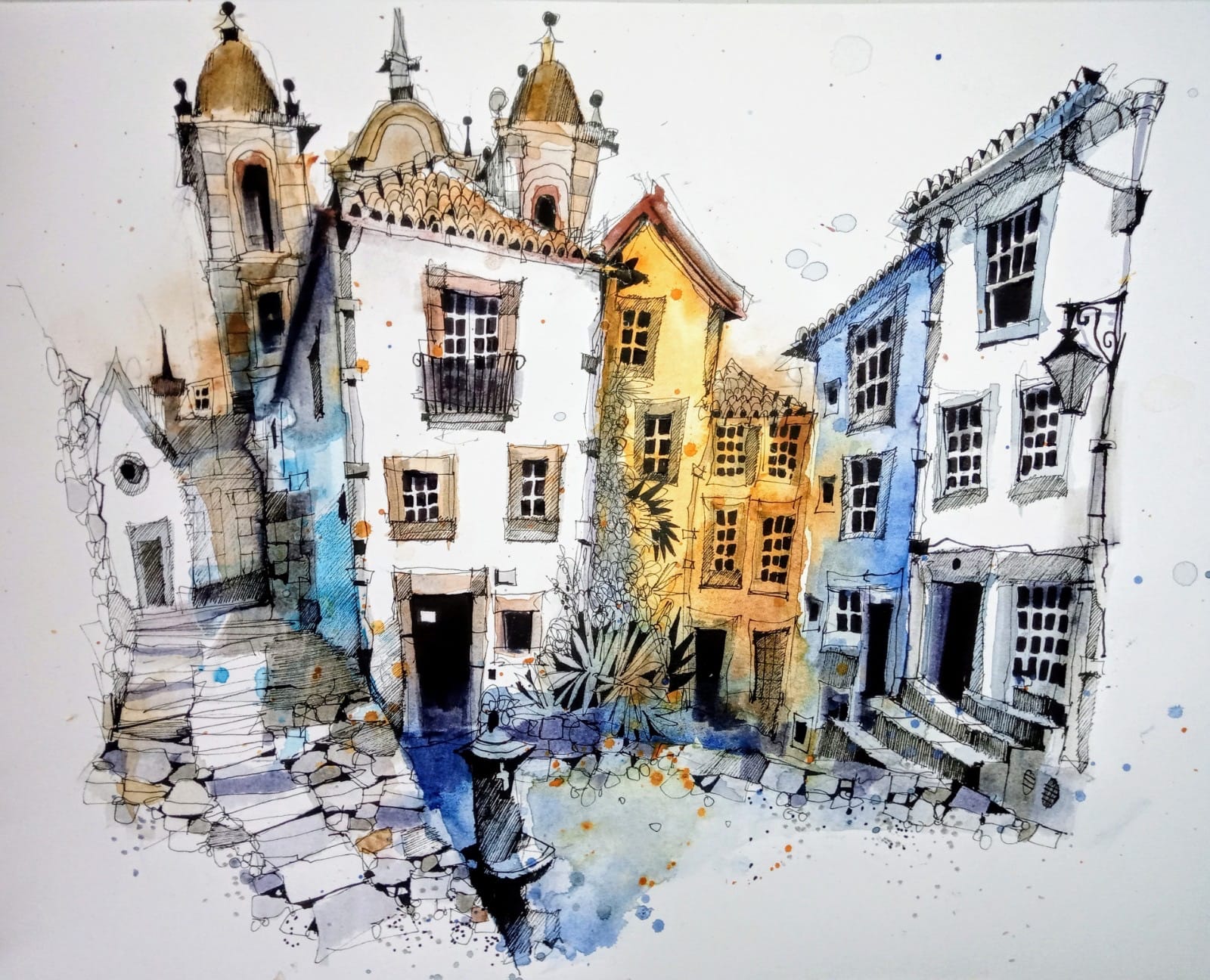
Spring is the perfect season to add a splash of nature’s beauty to your urban sketches. With vibrant flowers blooming everywhere, it’s an excellent time to practice capturing their charm on paper. Let’s explore some beginner-friendly techniques to make your floral drawings shine, including continuous line drawing, back-colouring negative space, and choosing complementary colours.


Start with Continuous Line Drawings
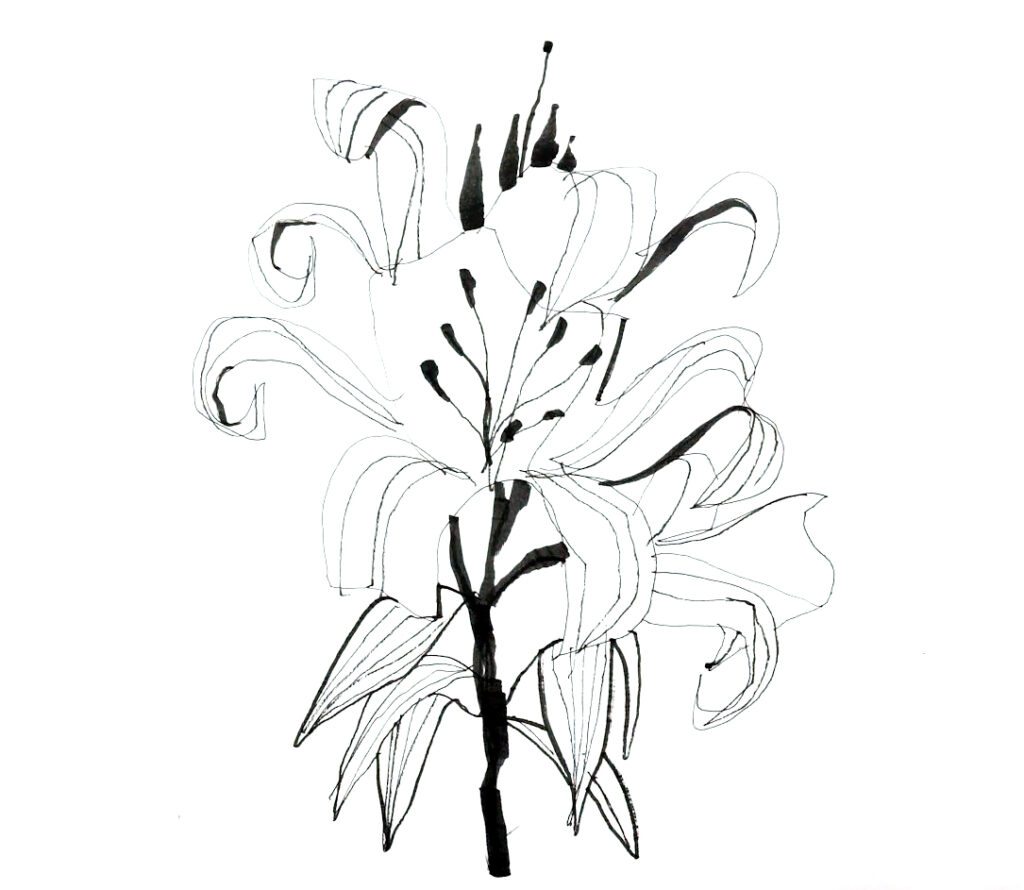
Continuous line drawing is a fantastic way to loosen up and develop your sketching confidence. Here’s how to use this technique for flowers:
Roses: Begin at the centre and work outward in a spiral motion, adding overlapping petals. Don’t lift your pen – let the lines flow naturally. The imperfect, sketchy quality captures the essence of a rose.

Lilies: Draw the trumpet-shaped bloom in one go, emphasizing the long, curved petals. Start with the centre and work outward for the petal details.
Sunflowers: Focus on the large, round centre, then move to the radiating petals. Keep your strokes lively and energetic to reflect the sunflower’s bold personality.
Continuous line drawing not only trains your hand-eye coordination but also adds a dynamic, expressive quality to your sketches.

Back-Colouring Negative Space
To make your floral sketches pop, try back shading the negative space around the flowers and leaves using Tombow brush pens:
- Define the Shapes: Once your line drawing is complete, identify the spaces between the petals, leaves, and stems.
- Use Tonal Variation: Choose shades of grey or soft complementary tones to fill the negative spaces. For instance, light grey can provide subtle contrast, while darker tones add depth.
- Enhance Depth: Carefully paint the negative spaces to push the white areas of the paper forward, creating a sense of dimension and focus. Tombow brush pens allow for smooth gradients and precise shading to achieve this effect.

Choosing Complementary Colours
Colour is vital in creating visually striking floral sketches. Complementary colours can add vibrancy and balance to your sketches:
- Red: Pair red roses or poppies with a green backdrop for bold complimentaries.
- White: Highlight white space in florals such as lilies with muted purples or soft greys.
- Yellow: Use rich, earthy greens or deep purples to contrast with sunny yellow petals.
Experiment with different colour palettes to find combinations that resonate with your artistic style.

Using Splashing with Watercolour
Splashing is a playful technique to bring vibrancy and energy to your floral sketches:
- Load Your Brush: Dip your watercolour brush into vibrant paint colours that match or complement your flowers.
- Create Splashes: Flick the brush over your paper to create random splatters around your flowers. This adds an organic, lively touch to your sketches.
- Control the Effect: Use smaller splashes for subtle texture or larger ones for a bold, dynamic look. Experiment with layering colors to achieve a multidimensional effect.
- Blend with Care: If the splashes land on your flowers, gently blend them in to enhance the natural flow of your artwork.
This technique not only adds vibrancy but also helps tie the background and focal points together seamlessly.

Sketching flowers is not just about capturing their beauty; it’s about appreciating the details and textures that make them unique. By incorporating continuous line drawings, back-colouring negative space, using complementary colors, and watercolor splashing, you’ll bring your floral sketches to life this spring.
What are you waiting for? Grab your sketchbook, head outdoors, and start sketching the vibrant blooms around you!
Ready to learn more?
Learn the art of urban sketching with Ian Fennelly in our Beginner’s course as he guides you through 47 easy-to-follow lessons, with practical exercises, that transform you from complete beginner to skilled urban sketcher!