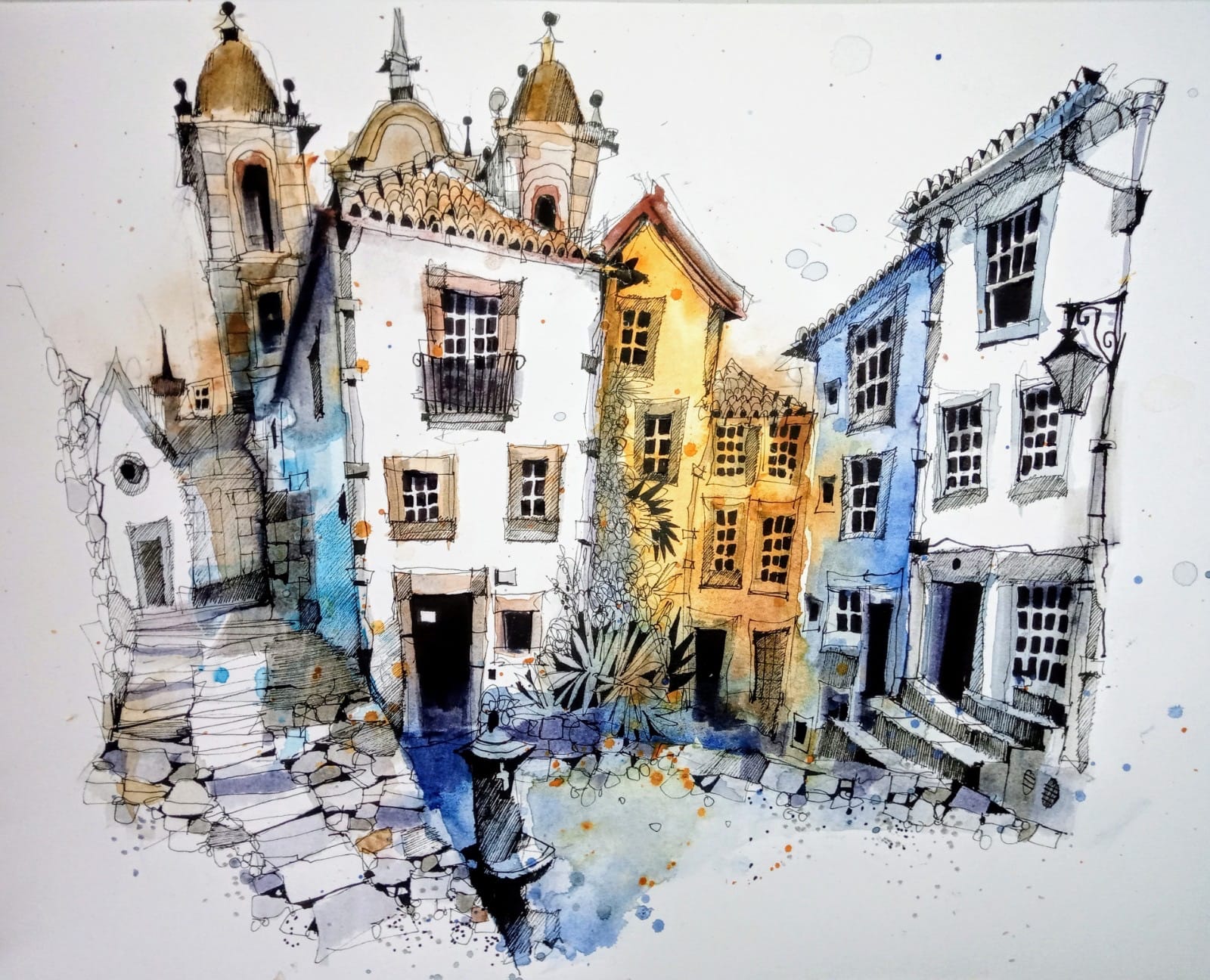
It happened during a recent live sketching session.
Amy, a student attending one of Ian Fennelly’s in-person retreats, shared something that made everyone pause mid-brushstroke.
“Watching Ian on screen, I always assumed he was really working the brush, pressing hard, scrubbing in the colour. But in person? His watercolour brush technique was so light. It completely changed how I thought it worked.”
Amy had been battling tired-looking washes. Overworked paint. Paper that felt like it needed a lie-down.
The real fix didn’t come from a new brush or fancy paint.
It came from changing how she handled the brush… using a softer, more controlled watercolour brush technique.

Rethinking Your Watercolour Brush Technique
It’s an easy habit to fall into: something looks off in your sketch, so you press harder, scrub more, and try to “fix it.”
But here’s the thing – most watercolour problems come from too much pressure, not too little.
If your sketches feel:
- Overworked
- Muddy or dull
- Stiff or lifeless
…your watercolour brush technique could be the hidden culprit.

Ian Fennelly’s Approach to Softer Brushwork
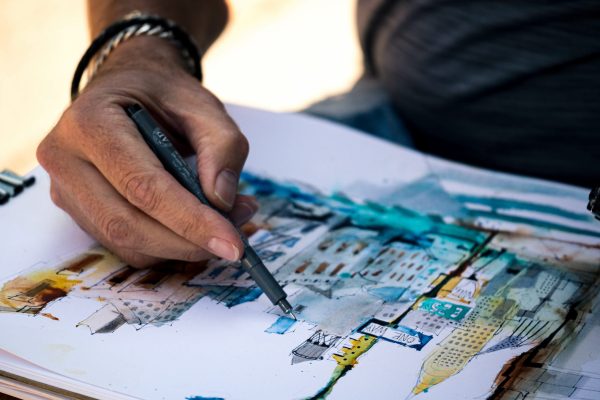
Ian doesn’t grip the brush like a tool he’s trying to wrestle.
He uses a relaxed, balanced hold that lets the bristles float across the page – allowing the paint and water to do most of the work.
Here’s how you can try it yourself:
- Hold the brush further up the handle – even if it feels awkward at first.
- Rest it lightly on one finger – don’t clench.
- Let only the tips of the bristles touch the page.
This light touch is the foundation of Ian’s watercolour brush technique, and it’s what gives his work that signature freshness, movement, and clarity.

A Simple Watercolour Brush Technique Exercise for Beginners
You don’t need a full scene to practise this. In fact, it’s much better to explore these techniques in isolation – so you can build confidence before committing to a finished sketch.
That’s exactly what we focus on in Urban Sketch+.
Inside the core watercolour training, you’ll find short, focused exercises that let you practise things like:
- Soft brushstrokes
- Layering transparent washes
- Keeping colours clean instead of muddy
All without the fear of “ruining” a sketch. No pressure. No perfection. Just purposeful practice.
In the meantime, here’s a quick warm-up you can do today:
- Load your brush with plenty of water and pigment.
- Fill a page with small rectangles or circles.
- In each one, apply a single, soft wash — as lightly as you can.
Focus on:
- Holding the brush gently.
- Letting the pigment drift across the page.
- Pausing if you catch yourself pressing too hard.
You’ll be amazed how effective a little softness can be.

Why a Softer Brush Technique Changes Everything
This isn’t just about protecting the paper – a softer watercolour brush technique unlocks:
- Cleaner colour transitions (no more harsh edges)
- Subtle blends where colours meet and mingle
- Longer-lasting paper that isn’t worn out after one layer
It’s the same principle Ian uses in his pen work: a looser grip, a more relaxed hand, and permission to let things wobble a little.
You don’t need to control every millimetre. You just need to guide the brush and let the materials do more of the work.

The Real Lesson? It’s Not the Tools - It’s the Technique
Amy didn’t need a new brush or a fancy colour palette.
She just needed to do what she was already doing – but much, much softer.
And if your sketches are feeling heavy or overworked, the fix might be simpler than you think.
Try holding your brush lighter. Let the pigment run. Give your paper a break.
Sometimes, less really is more.

Want to Practise This With Guidance?
If you’d love to explore your watercolour brush technique in a friendly, pressure-free environment, Urban Sketch+ is designed for you.
Inside the course, you’ll find:
- Bite-sized video lessons on brush control, washes, and layering
- Specific drills to practise soft brushwork (before using it in a full sketch)
- A supportive community where it’s safe to experiment and grow
- Live sessions and feedback to help you keep progressing
You don’t need to figure it out alone. Let’s sketch, learn, and enjoy the process – one gentle brushstroke at a time.