How to Give Constructive Feedback for Urban Sketchers

Feedback should be positive and constructive, however delivering that all-important news without causing offence isn’t the easiest
Feedback should be positive and constructive, but sometimes trying to help without causing offence can be difficult. To help you provide feedback to your peers, we’ve made the perfect guide on how to give awesome feedback to fellow Urban Sketchers!
Reference photograph used in Urban Sketch Course lessons

What’s the Point of Feedback?
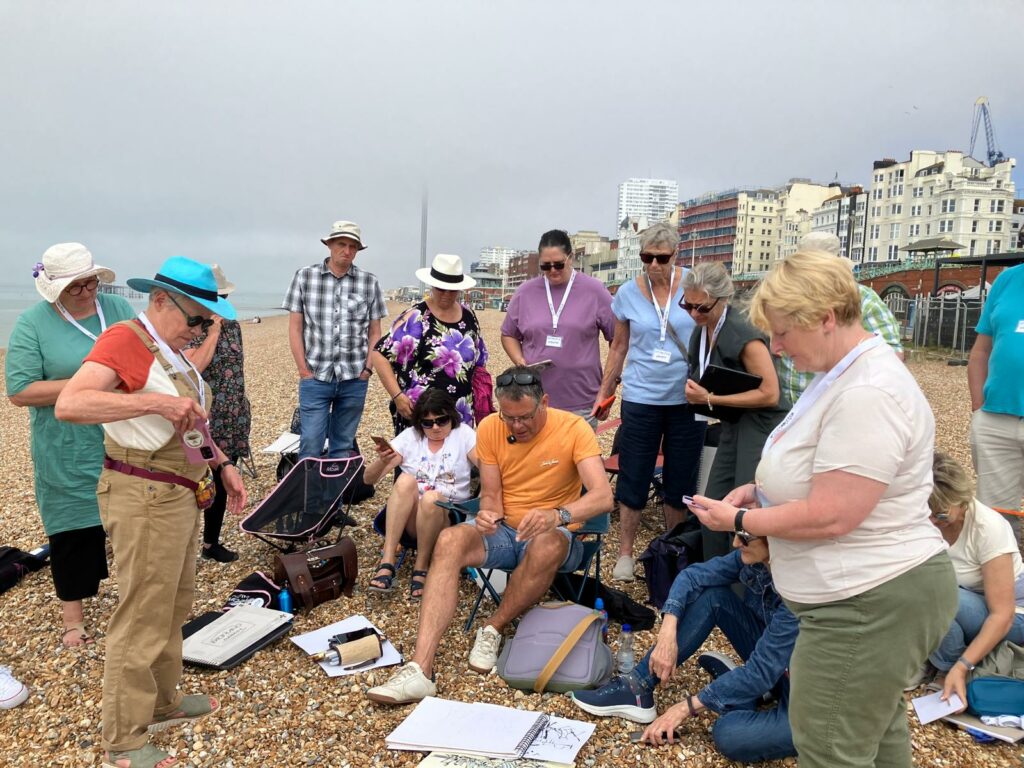
Without feedback to your work you could still be making the same basic mistakes. The point of seeking out constructive criticism is to improve ourselves as artists, overcome weaknesses and learn what others like – which is especially useful when making money out of your sketches. Sometimes this feedback can be hard to accept, but delivering it concisely and professionally won’t upset the recipient. It’ll also make you look like a trusted mentor with a valued voice. The best type of feedback gives the original artist insight or understanding of what you see in the picture. Every picture we see, we either like, or dislike for a particular reason. It’s that reason we need to express our views so that the artist can figure out what they did well and where they can improve.
IMG-20240624-WA0035 – Urban Sketch Course

What Kind of feedback?

Now, giving awesome feedback is not simply saying ‘well done’, ‘oh wow’ or ‘incredible sketch’.

Of course, those remarks are lovely to hear but to make it fantastic (and helpful) feedback then you’ve got to spice it up a little!

Here’s some examples and ways to expand on that thought…

Instead, try saying…
‘I love the rich colours. They caught my attention straight away. It really brings the picture to life and makes it standout.’

Instead, try saying…
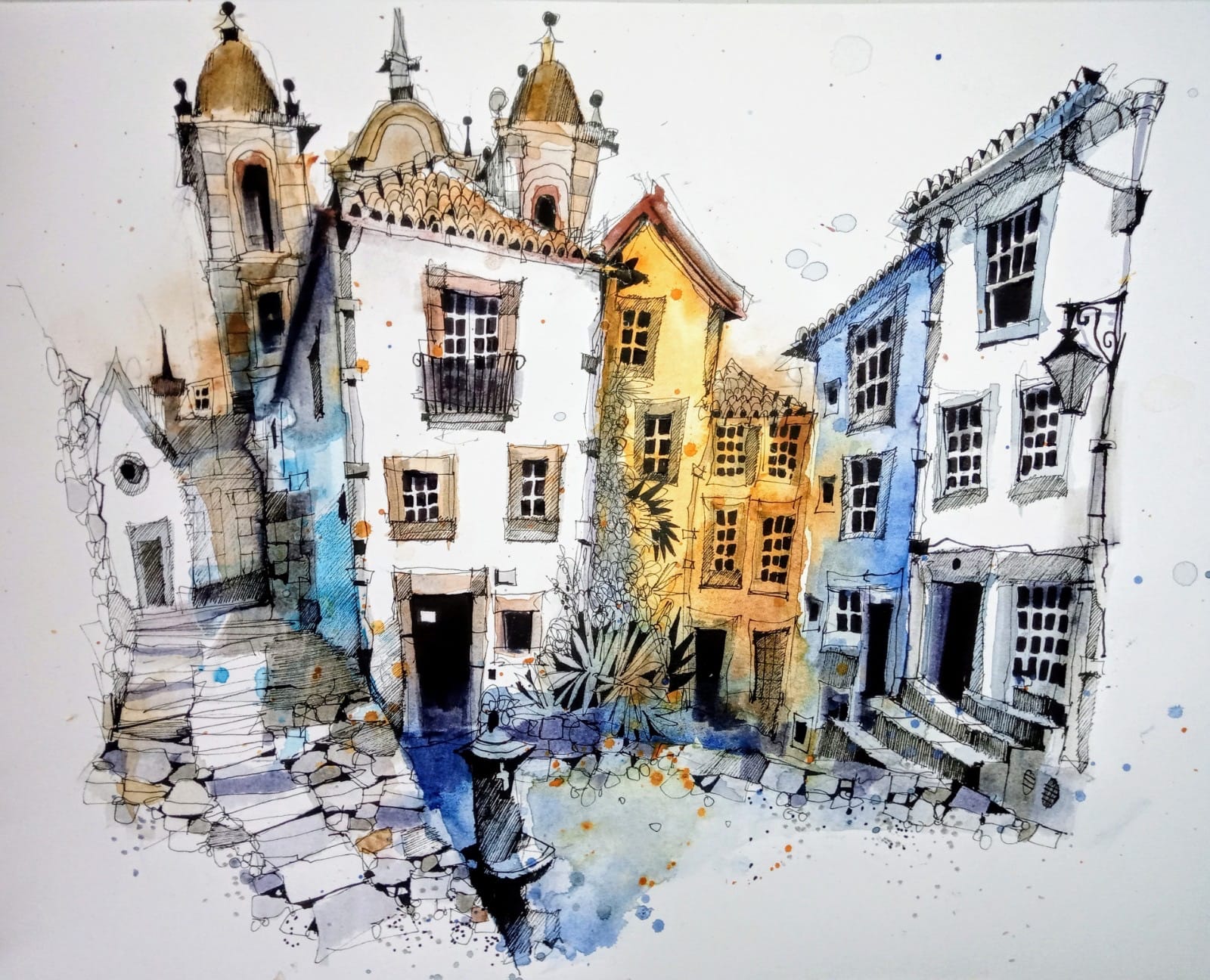
‘The perspective in this sketch really sets the scene. I can feel myself being drawn into the picture. The cobbles getting smaller into the distance sells this composition.’

Instead, try saying…
‘I really like what you’ve done with your tone work, particularly the addition of cross hatching. Adding details into the shadows can really emphasise the structure, making it appear more 3D.’

Student artwork PRAS1206 – Urban Sketch Course community gallery

“What we’re trying to do in a pre-sketch is simplify it, so that when we do the workshop piece, I know exactly the route that we’re going to take. Where we’re not over-layering everything, and making it too complicated, we’re just letting things go and really capturing the essence of the scene.”

How to be constructive?

Few people really want to be negative, but sometimes telling people where they can improve their sketches is vital, even if it’s hard for them to take. If you want to be more honest with your gallery comments, but not sure how, we think that this is a good approach…
  • Firstly, a positive general overview
  • Secondly, a discussion about where to improve
  • Finally, an encouraging remark for taking forward
Reference photograph used in Urban Sketch Course lessons

How to be positive?

Let us show you how you can change negative criticism into positive constructive feedback. Instead of saying:

Instead, try saying…
‘The colours in this are really eye-catching! I wonder if your perspective is a little tilted on the left hand side, perhaps next time you could try Ian’s technique of using the pens first? That would really make this a fantastic sketch!’

Instead, try saying…
‘I really like the pen work you’ve used in this sketch. You could try going back over it with deeper colours to emphasise the brightness, I think that would be a wonderful addition.’

Instead, try saying…
‘You’ve made a really good start to urban sketching! Now that you’re getting to grips, I would recommend adding in more character to the buildings, this could really develop your style!’

Without being condescending or blunt, giving constructive feedback is actually quite easy. Use this approach and you won’t go wrong. If you’d like to read more about how to take feedback onboard, we’ve got a blog for that here.

Offer Advice

Currently there is lots of great feedback already going on, but these tips could just help and encourage more of us to engage in the comments. As an online training community, Urban Sketch Course is committed to ensuring you’re always improving your skills and we believe a more engaged gallery will benefit everyone.

So, we ask you from one group of artists to another, help out your fellow creative and start commenting on the gallery today.

Remember, the more you give, the more likely you are to receive!

Please note that the feedback gallery is a peer-to-peer environment where we encourage all of our students to offer positive advice and constructive criticism to each other. It is there to help you develop as an artist with help from the Urban Sketch Course community. We look forward to seeing your sketches there soon!
How to Give Constructive Feedback for Urban Sketchers

Learn Urban Sketching

In our Free Course!

Ian Circle 2 – Urban Sketch Course

About the Artist

Ian Fennelly focuses on capturing urban spaces and environments by drawing the places where people have been without actually including them.

His process involves layering watercolors, brush pens, and liners to build depth, texture, and detail, allowing them to fully immerse in the scene while adapting to changes in their surroundings.

Urban Sketch Course promotional image – online sketching course

About Urban Sketch Course

Our mission is to connect you with the world through the art of urban sketching

- More Blog Posts -

Reference photograph used in Urban Sketch Course lessons
Discover some of Ian Fennelly’s best sketching advice
Rural Sketch Course Filming Images - (85)
We've compiled our essential art tips tailored for beginners to help guide your first strokes and infuse confidence into your creative process.
Junkyard – Urban Sketch Course
Discover a simple 5-step sketching method you can use for any subject. Learn how to sketch with confidence, develop your personal style, and bring everyday scenes to life with our beginner-friendly urban sketching courses.
Student artwork PRAS4493 – Urban Sketch Course community gallery
Learn to embrace looseness and spontaneity in your urban sketching with five simple tips that transform your art and rediscover the joy of creative flow.