
How to Draw with Paint Using a Rigger
- Blog
- June 27, 2026
- 15 mins
For a lot of us, the pen does the drawing and the brush only adds the colour. They stay two separate jobs that never quite meet, which can leave the line work and the colour feeling as though they belong to slightly different pictures.
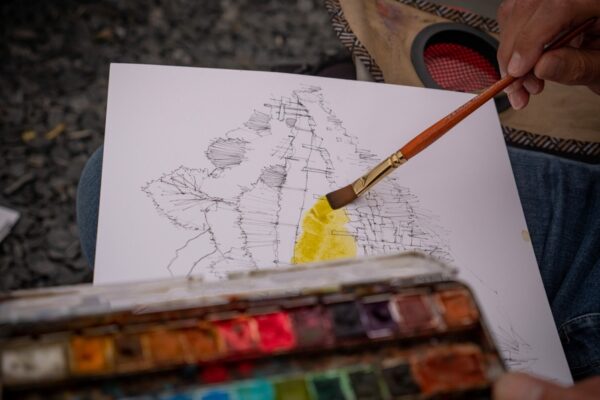
Ian works a little differently. For him, the brush is a drawing tool in its own right. He will draw branches, railings, window bars and rooflines straight in paint, alongside the pen, and it is a big part of why his sketches feel so loose and alive.

What "drawing in paint" means
It is exactly what it sounds like: using a loaded brush like a pencil. Rather than only filling areas with colour, you draw the lines and details with the paint itself.
Ian does it on almost every course. On the Beginners course he picks up a fine brush and tells you to “take a watery line for a walk.” Partway through a Five Villages sketch he says, plainly, “I’m basically drawing in paint at this stage.” The location changes, the subject changes, but the habit stays the same: the brush is for drawing, not just colouring.
The rigger: the brush he reaches for
The brush that makes this easy is a rigger, a long, thin brush with surprisingly long bristles.
"A rigger is just a long, thin brush... it just loads lots of water, so you can basically draw with it and it doesn't run out."
– Ian Fennelly
An ordinary thin brush is lovely for detail, he says, but “you can’t really draw with them.” Small wonder he calls riggers “fabulous for drawing in paint.”
He tends to reach for an acrylic rigger rather than a traditional watercolour one, because it holds even more paint and water and stands up to being pushed around the page. He keeps a few sizes: a larger one, around a number four, for rich, deep lines, and a zero for finer detail.

How to do it
Load the brush well. A rigger is built to carry plenty of paint and water, so do not be shy with it. A well-loaded brush keeps the line flowing instead of running dry halfway along.
Hold it lightly. This is the part that surprises people. Ian holds the brush right up near the top and lets the weight of the brush do the work, rather than gripping it tight down by the bristles. A loose hold gives a loose, lively line.
Vary the pressure. Press a little and the line thickens; lift and it runs hair-thin again. One brush gives you a whole range of marks, from a delicate twig to a bold railing.
Let it sit with the colour. Because the lines are made of the same paint as your washes, they belong together on the page in a way that pen lines sometimes do not. The drawn lines and the colour become one thing.
It feels odd the first few times, a little wobbly, a little out of your control. That wobble is part of the charm. A brush line has a character that a pen rarely matches.
If looseness is the very thing you find hardest, you are in good company. One of our sketchers, Suzanne, asked us plainly, “What can I do to help me let go and loosen up with my painting?” Drawing with the brush is one of the gentlest answers, because a brush will not let you fuss over a line the way a pen will.
Going further: painting first
Once drawing with the brush feels natural, there is a bolder version worth trying: starting the colour with no pen lines at all. On his Red Rocks workshop, painting the rock formations, Ian begins with “no line work here to help me,” shaping everything straight in with colour. “I’m actually drawing with colour,” he says, and putting the colour down first like that “really frees everything up. Just much freer.” He describes the whole stage as “drawing and composing with colour,” not filling anything in.
It is a leap, and not where you would start. But it shows where the habit leads: a sketch where the drawing and the painting are the very same act.

Final Thoughts
You do not need to change everything at once. Next time you sketch, keep the pen for the structure, then pick up a brush and draw a few of the details in paint, a branch here, a railing there, and see how it ties the line and the colour together. World Watercolour Month begins on 1 July, which makes it a lovely time to play with it.
Ready to learn more?
If colour and watercolour are the parts you would most like to feel surer about, that is exactly what Urban Sketch PLUS is for. Inside you will find dedicated colour and watercolour training, as well as recorded webinars in a range of topics, alongside a friendly community working at it together, month after month.
How to Draw with Paint Using a Rigger

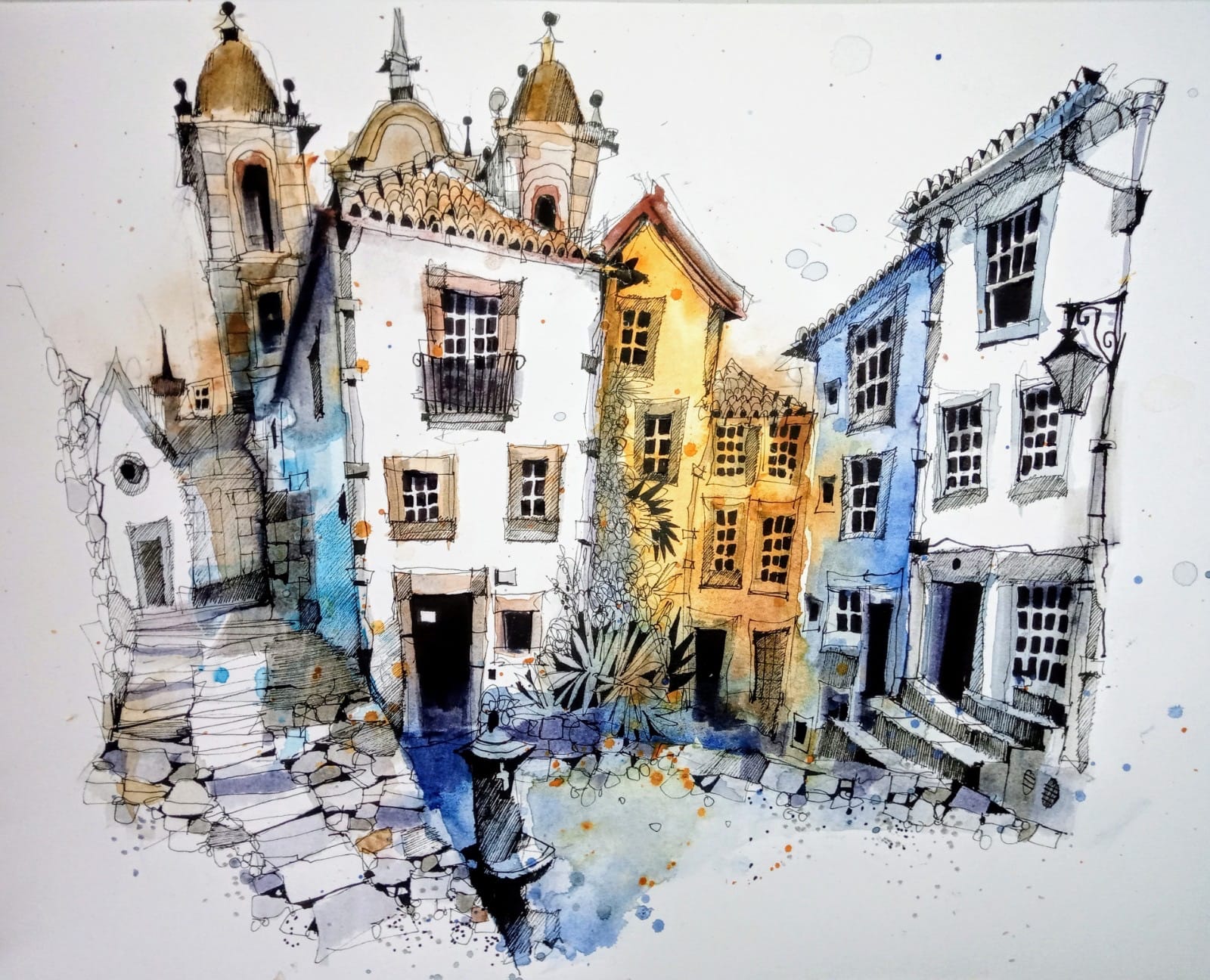

About the Artist
Ian Fennelly focuses on capturing urban spaces and environments by drawing the places where people have been without actually including them.
His process involves layering watercolors, brush pens, and liners to build depth, texture, and detail, allowing them to fully immerse in the scene while adapting to changes in their surroundings.
About Urban Sketch Course
- More Blog Posts -

- 12 mins
- 31 mins
- 26 mins
- 13 mins