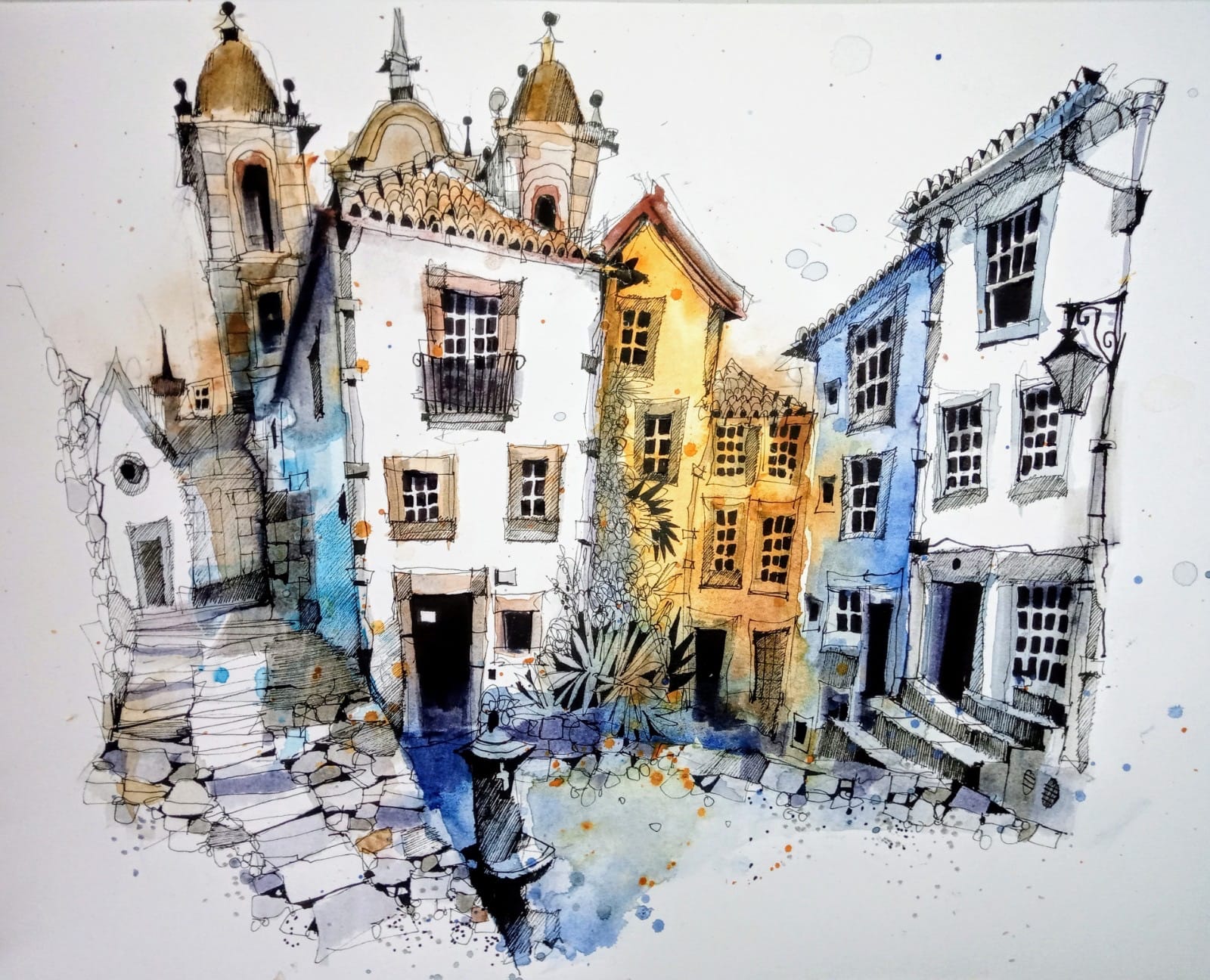
Every Sketch Tells a Story
Whether it’s the bustling energy of a market or the quiet stillness of a side street, each drawing captures not just the visual details of a moment, but also the emotions, memories, and stories embedded within it. Urban sketching transforms an artist into a storyteller, weaving a narrative that reflects the essence of a place and the personal connections tied to it.
Ian Fennelly brings these ideas to life in his inspiring book, Sketching Stories. In this captivating journey through urban landscapes, Fennelly delves into the heart of what makes urban sketching so magical: the intertwining of art and storytelling. With every stroke of his pen and brush, he captures not just the physical details of a scene but also its emotional resonance.

The Power of Sketching Stories

"Most of the work in this book is a tale of two sketches—what you see and what you understand."
– Ian Fennelly
The Art and Soul of Sketching Stories
Sketching Stories is more than a guide to urban sketching; it’s an invitation to look deeper into the places we inhabit. With vivid sketches and heartfelt narratives, Ian Fennelly illustrates how every street, building, and corner has a tale to tell.
From bustling city squares to quiet alleyways, his sketches celebrate the beauty and complexity of urban life. The book also highlights how personal connections can enrich the storytelling process, as memories and reflections add depth and meaning to the artwork.

Becoming a Storyteller with Your Sketchbook
For urban sketchers, capturing a story is as much about observation as it is about emotion. When you sit down to sketch a scene, you’re not just recording what you see; you’re exploring what it means to you.
Here are a few ways to embrace storytelling in your sketches:
- Look for the narrative: What’s happening in the scene? Is it a lively market, a quiet park, or an old building that whispers of the past?
- Add personal connections: Reflect on your own memories or feelings about the place and let them influence your sketch.
- Embrace imperfection: A sketch doesn’t have to be photorealistic. It’s the personal touch and emotional resonance that bring it to life.
- Consider contrasts: As Ian demonstrates, juxtaposing elements—like the ornate ironwork of a Victorian shelter against a modern amusement arcade—can enrich the story you’re telling.