The Crucial Role of Pre-Sketching in Art
Often referred to as a pre-sketch, pre-drawing, or pre-sketching, this crucial phase is a vital but frequently underestimated part of the artistic process. By laying the groundwork for the final artwork, it ensures a well-structured and cohesive finished piece.
This blog post delves into some of the benefits of pre-sketching with advice from Urban Sketcher and teacher Ian Fennelly.
From playing with composition and negative space to getting ready for colour application, let’s delve into this phase and discover why it’s essential for confidently creating your best artwork.
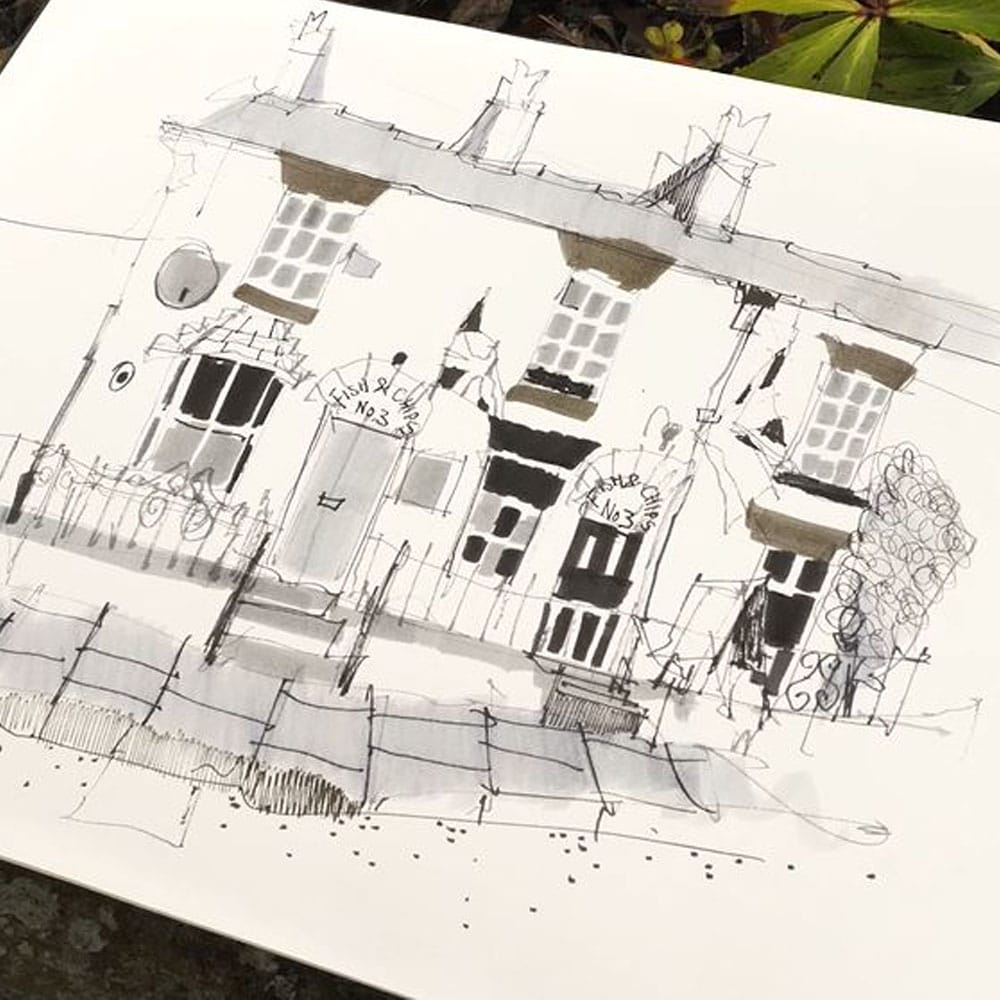
Planning and Visualising
Pre-sketching is a great way to test a range of different concepts, ideas and techniques. By experimenting with different elements on your page, it allows you to see how they will come together in the final piece.
When an artist begins with a pre-sketch, they can explore various compositions and layouts, testing out different arrangements of elements. This experimentation helps them determine the most effective way to convey their intended message and achieve their artistic vision. visualize the composition of a final piece before committing to more permanent methods or materials. This preliminary step allows artists to experiment with different layouts, perspectives, and elements, focusing on the most important features and characteristics
Visualizing the concept in advance can help artists make informed decisions about the placement and proportion of each element, ensuring a harmonious and balanced composition.
By having a clear visual plan in place, artists can approach the final piece with a sense of direction and purpose, knowing exactly what they need to do to achieve their artistic vision. This confidence helps to create a more successful and satisfying artistic process.

The Wagon featured in The Wild West Sketch Course
“What we’re trying to do in a pre-sketch is simplify it, so that when we do the workshop piece, I know exactly the route that we’re going to take. Where we’re not over-layering everything, and making it too complicated, we’re just letting things go and really capturing the essence of the scene.”
– Ian Fennelly
Determining Composition, Space and Scale
The pre-sketch phase is invaluable for determining the composition of a piece. Composition refers to the arrangement and organization of elements within the artwork, and it plays a crucial role in guiding the viewer’s eye and conveying the intended message. By planning the composition, artists can ensure that all elements fit well within the page and work together to create a cohesive and balanced piece.
During the pre-sketch phase, artists can experiment with different compositions, testing various arrangements of elements to see what works best. This experimentation allows them to explore different perspectives and find the most effective way to convey their artistic vision. By determining the composition in advance, artists can avoid any issues with proportion and placement in the final piece, ensuring that all elements are harmonious and well-balanced.
Additionally, pre-sketching helps artists to simplify complex areas and avoid over-layering. By identifying potential problem areas in the pre-sketch phase, artists can make adjustments and refinements to ensure clarity and coherence in the final piece.
This simplification helps to prevent any confusion or visual clutter, making the artwork more accessible and easier to interpret.
Let’s take a look at one of Ian Fennelly’s Examples from The Wild West Sketch Course:

“This pre-sketch tells me the parameters of the sketch and how the ranch building fits into the page with the slope and the angle. I’ve exaggerated the roof and it will help me with the workshop, it shows wonderful patterns and it shows a great sense of perspective and you can read the roofline. The wheels at the bottom tell a story of the ranch and the tree going up has lots of texture and tonal value and breaks off in different directions. It’s helped me a lot in terms of composition but in terms of texture too.”
– Ian Fennelly
Exploring Negative Space
One of the most significant advantages of pre-sketching is the ability to explore negative space. Sometimes also called white space, the area around and between the subjects of an image is crucial for creating contrast and enhancing visual interest. By experimenting with negative space in the pre-sketch phase, artists can achieve a more dynamic and visually appealing composition.
For example, pre-sketching allows artists to play with the balance between positive and negative space, testing different arrangements to find the most effective use of space. This experimentation helps them to create a sense of depth and dimension, making the final piece more engaging and visually compelling.
Furthermore, pre-sketching enables artists to identify areas where negative space can be used to enhance the overall composition. By intentionally incorporating negative space, artists can draw attention to specific elements and create a more focused and cohesive piece. This deliberate use of negative space adds depth and complexity to the artwork, making it more visually striking.
“Depending on the scene and subject, sometimes you want the scene to have lots packed in, but other times like landscapes, you want to capture the white space because it allows the picture to breathe, balances the sketch and enables you to have a focal point.”
– Ian Fennelly
Capturing the Essence
One of the primary goals of pre-sketching is to capture the essence and story of the subject or scene. By focusing on the most important features and characteristics, artists can create a more powerful and impactful final piece. Pre-sketching allows artists to identify the key elements that define the subject and ensure that these aspects are accurately represented.
During the pre-sketch phase, artists can explore different ways to capture the essence of their subject, experimenting with various techniques and approaches. This experimentation helps them to find the most effective way to convey the subject’s unique qualities and characteristics. By refining the concept in the pre-sketch phase, artists can create a more focused and coherent final piece.
Additionally, pre-sketching allows artists to add context to their subject, incorporating shadows and surroundings to give depth and realism to the final piece. This contextualization helps to create a more immersive and engaging artwork, drawing the viewer in and enhancing their understanding of the subject.

Ensuring Readiness
Finally, pre-sketching is crucial for ensuring that artists are ready for the final piece. By providing a clear plan and structure, pre-sketching helps artists approach their work with confidence and purpose, knowing exactly what they need to do to achieve their artistic vision.
During the pre-sketch phase, artists can refine their concept and composition, making any necessary adjustments and refinements. This preparation helps to ensure that the final piece is well-structured and coherent, free from any errors or complications. By having a clear plan in place, artists can approach their work with a sense of direction and focus, knowing exactly what steps they need to take to achieve their desired outcome.
Additionally, pre-sketching helps artists to stay organized and on track, ensuring that all essential elements are included and accurately represented. By having a visual representation of their plan, artists can stay focused and avoid any unnecessary distractions or detours. This structured approach helps to create a more efficient and effective artistic process, resulting in a more successful and satisfying final piece.
Ready to learn more about Pre Sketches?
Try our Quick Sketching course filmed in Liverpool, UK: