Picking Your Perspective
Choosing angles and perspectives when urban sketching is important. There are lots of external factors to consider especially when on location. Ian shares a few ways to choose angle and perspective when urban sketching.Think about the story of the sketch
Every location and building has its own narrative. Begin by asking yourself what elements of the scene stand out to you personally. Is it the historical significance of a grand old building, the bustling energy of a street market, or the serene atmosphere of a quiet park? Then look again deeper, is there a quirky drain pipe, an interesting street sign, or a wobbly tv aerial. These are all elements of a scene that can contribute to your overall story. Storytelling in urban sketching is about more than just depicting a scene; it’s about creating a dialogue between the viewer and the environment.Move around until you find the spot
Don’t hesitate to shift around slightly until you discover a perspective that resonates with you. The beauty of urban sketching lies in its dynamic nature; the environment is constantly changing, and so is your perception of it. By physically shifting your position, whether it’s stepping to the side, crouching down, or even climbing a few steps to gain a higher vantage point, you can unlock a variety of compositions that might capture the essence of the scene more effectively than a static viewpoint.
“By shifting over slightly to the left or the right, it brings in a different perspective, it tells more of a story. It might just bring a tree into the picture or a lamp into the picture and all those things are really important because it makes the whole composition more visually stimulating and more interesting for you.”
– Ian Fennelly
Be Willing To Compromise
Part of the excitement of urban sketching lies in the vibrant, dynamic atmosphere of being on location, where the energy of the city surrounds you. This environment is filled with life—sounds, movements, and interactions that are constantly shifting. However, it also means that you must be adaptable and willing to compromise with various external factors that can affect your sketching process.
For instance, when sketching in a busy public space, you might encounter unexpected distractions, such as people moving in and out of your field of vision or the noise of traffic. Rather than viewing these distractions as obstacles, consider them as part of the vibrancy that you can incorporate into your work. Capturing the essence of movement and activity can lend a sense of atmosphere and life your sketches.
“Sometimes the composition chooses you on a practical level. You might have to compromise and shift yourself to be somewhere slightly more sensible. If you’re somewhere busy, you must get out of the way. There are lots of external factors that dictate the angle.”
– Ian Fennelly
- More Blog Posts -

What’s in Our Students’ Bags: Sketching Kit Tips from the PLUS Community
Makeup rolls, folding stools, bulldog clips and even a collapsible dog bowl. Here are the paper, bags, pens and seating tips our students swear by, in their own words.
Read more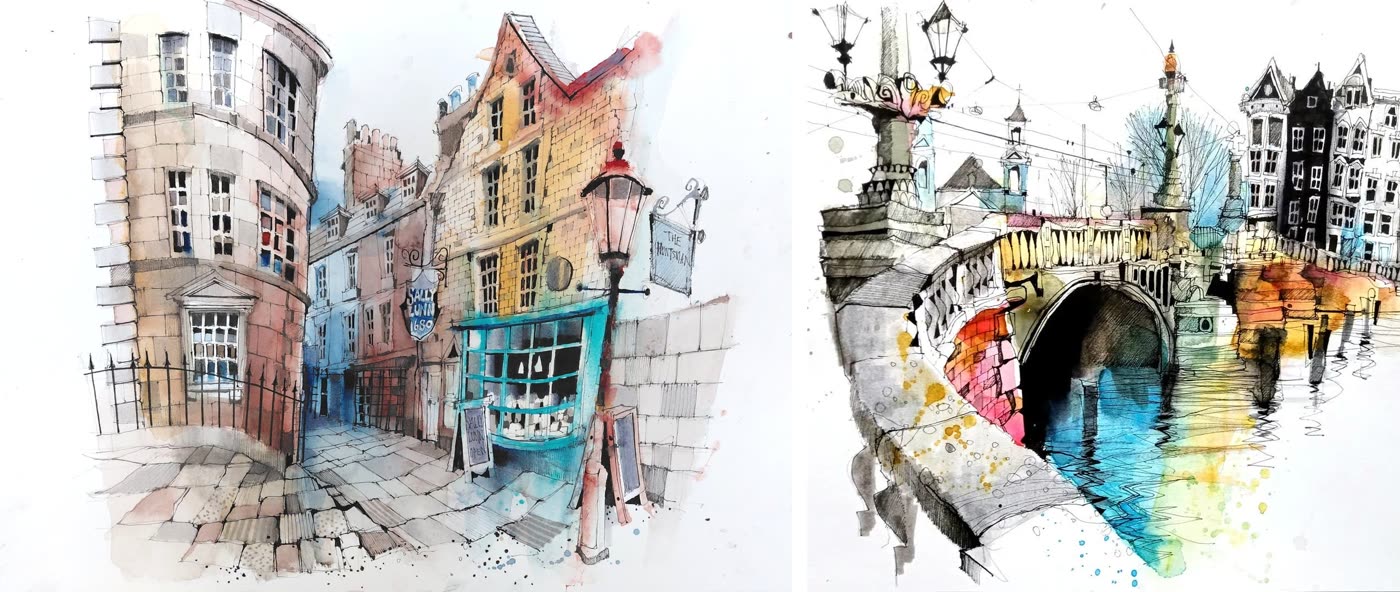
Change the Colour, Change the Story
Ian’s 4 reasons for every colour he picks, and how they played out in six very different places.
Read more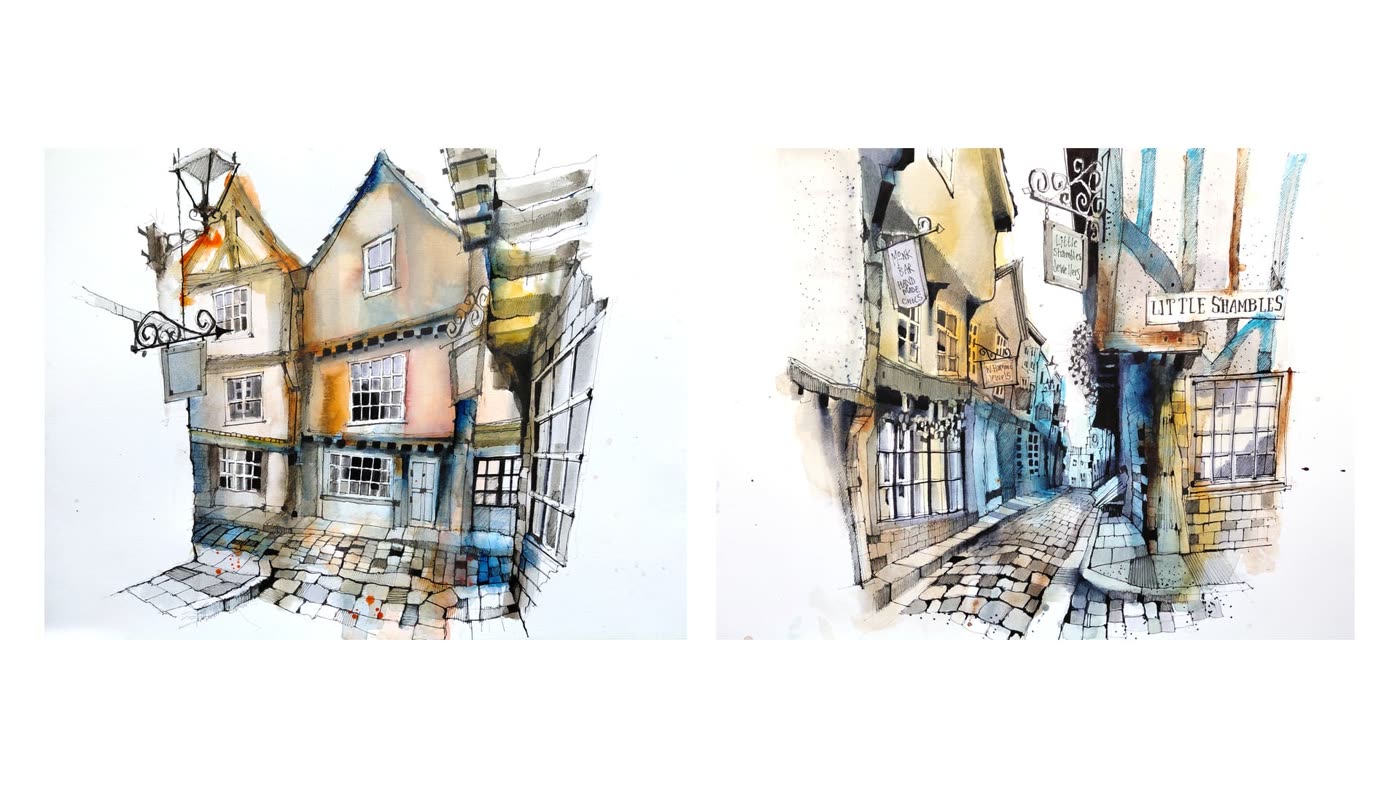
Ian’s Map of York: How to Find Five Sketches in One Small Patch
Ian found all five York workshops a few minutes’ walk apart. The trick wasn’t finding new places. It was standing somewhere new.
Read more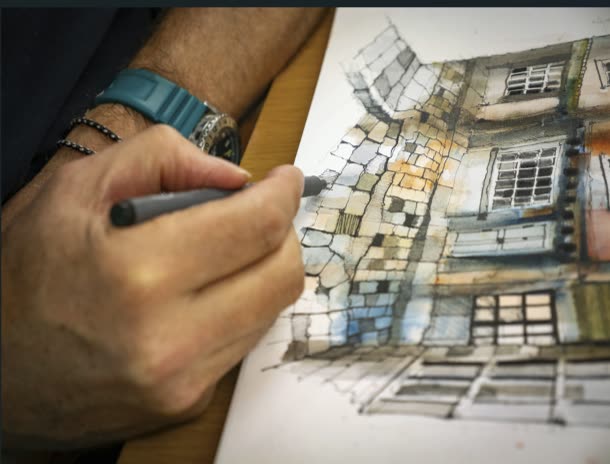
Why Hatching Goes On Top of the Paint
You don’t have to plan for texture at the start of a sketch. Ian puts his hatching on last, over the paint, and it does three jobs at once.
Read more